Five Essential Books on Women in the Early Civil Rights Movement
Keri Leigh Merritt Recommends Patricia Bell-Scott, Jacqueline Dowd Hall, John Egerton and More
While the story of the Civil Rights Movement of the 1950s and 1960s is well known by all Americans, the decades preceding it remain a mystery to many. And while Martin Luther King, Jr., Malcolm X, and a few other notable men are revered as heroes, the women who fought back against Jim Crow are often left out of the narrative, leaving entire generations of Black and white Southern heroines unsung. Decades before boycotts and marches, these women built grassroots networks, organized groups with memberships in the millions, and strategized how to take down the legal structures of white supremacy. Artists, activists, lawyers, and teachers, these women laid the foundation for the period we are taught about in textbooks.
From Mary McLeod Bethune, Mary Church Terrell, Jesse Ames Daniels, and Pauli Murray to Ida B. Wells, Septima Clark, Audley Moore, and Lillian Smith, women were some of the leading architects of direct action in the post-World War II period. Intentionally working together across racial and class lines, these activists helped create and sustain organizations such as the National Association for the Advancement of Colored People (NAACP) and the pacifist Congress of Racial Equality (CORE), and made important inroads for labor and economic improvements in the region.
As I learned very well in writing my biography of Lillian Smith–one of these overlooked women–by broadening our understanding of the post-Depression era South, the true beginnings of the long civil rights movement are laid bare. This chapter of American history reminds us that the quest for justice is a lengthy and often agonizing process—but incremental progress over time can truly change the world. And women have played an important role for decades.
*
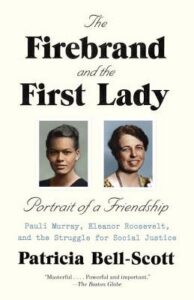
Patricia Bell-Scott, The Firebrand and the First Lady: Portrait of a Friendship. Pauli Murray, Eleanor Roosevelt, and the Struggle for Social Justice
Patricia Bell-Scott’s 2016 double-biography examines the long and, at times, tumultuous twenty-five year friendship between First Lady Eleanor Roosevelt and writer-scholar-activist Pauli Murray. Using letters, diaries, and journals, Bell-Scott shows how their intellectual partnership blossomed. Roosevelt’s patrician upbringing, as well as ties to her husband’s career, led to certain frictions between the two, with Murray consistently urging the First Lady to act on behalf of Black Americans and other oppressed peoples. From labor struggles and lynching to desegregation, Murray served as the ethical voice of reason, directing Roosevelt to use her immensely powerful position on behalf of righteous causes. The Firebrand and the First Lady demonstrates that the early civil rights movement was built on a foundation of deep, complicated, long-term relationships which traversed the boundaries of both race and class.
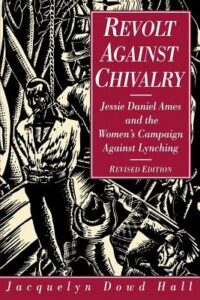
Jacqueline Dowd Hall, Revolt Against Chivalry: Jessie Daniel Ames and the Women’s Campaign Against Lynching
Originally published in 1979, Revolt Against Chivalry challenged everything historians thought about upper and upper-middle class white Southern women during the Jim Crow era. Connecting suffrage to the early civil rights movement, Dowd Hall demonstrates how a sizable network of churchgoing white women revolted against the white patriarchy and helped put an end to lynching in the South. Led by the white Texas businesswoman Jesse Daniel Ames and initially based in Atlanta, the Association of Southern Women for the Prevention of Lynching (ASWPL) had four million members by the early 1940s. Ames was able to expand so rapidly by using organizations that were already established: Methodist and Baptist church groups. Dowd Hall shows how the ASWPL destroyed the notion of white Southern chivalry, as the women flatly denied that lynchings were because of the rapes of white women. Declaring that they did not need white men to preserve their honor and virtue, stripping lynch mobs of all possible morality. These women pressured local judges and sheriffs, and would actively show up to courthouses, protecting potential lynching victims with thier own bodies.
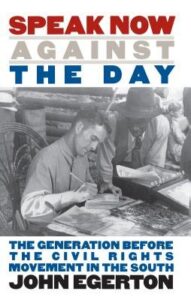
John Egerton, Speak Now Against the Day: The Generation Before the Civil Rights Movement in the South
Speak Now Against the Day argues that the decade between 1938 and 1948 was a window of lost opportunity in the South, when an interracial coalition of Southern liberals tried—but unfortunately, ultimately failed—to dismantle Jim Crow. Journalist John Egerton won the prestigious Robert F. Kennedy Book Award for this story of the radical alliance between Black and white Southerners of different backgrounds and classes. Citing World War II as the start of a period partially radicalized by Black soldiers returning home from fighting injustice abroad, Egerton shows a growing Southern labor movement, as well as the flourishing of institutional organizing, particularly through the Southern Conference for Human Welfare (SCHW). Despite making massive gains, however, white supremacist backlash—including the rise of the Dixiecrats—ultimately crushed the movement’s momentum. But, as Egerton concludes, the gains of the 1950s and 1960s would have been unattainable without the groundwork laid by this earlier generation of activists.
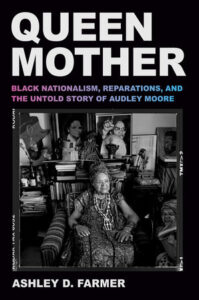
Ashley Farmer, Queen Mother: Black Nationalism, Reparations, and the Untold Story of Audley Moore
Ashley Farmer’s meticulously researched new biography sets out to challenge the narrative of a male-centric Civil Rights Movement. Born in 1898 in New Iberia, Louisiana, Audley Moore became one of the most important Black nationalists and civil rights activists in the US—yet most Americans have never heard of her. Moore’s mother died when she was six, leaving her to be raised by her grandmother, who had been born during slavery. Working to help raise her two sisters, Moore became politically active in her teens, and by 1920 was a follower of Marcus Garvey. Although she wanted to move to Africa, she and her family settled in Harlem, and she joined the Communist Party and the Civil Rights Congress, among many other organizations. Throughout a long life fighting for reparations, Audley “Queen Mother” Moore worked tirelessly on behalf of Black Americans, Africans, and especially Black women. Using surveillance files, grassroots records, and family interviews (Moore died at 98 years old in 1997), Farmer masterfully weaves together the life of this amazing woman, linking the Black nationalist movement to the larger, longer civil rights struggle, revealing both its complexity and gradual evolution.
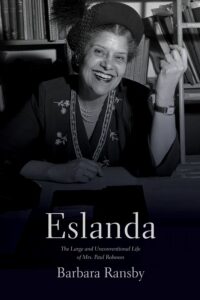
Barbara Ransby, Eslanda: The Large and Unconventional Life of Mrs. Paul Robeson
For far too long Eslanda “Essie” Goode Robeson was primarily known as being Paul Robeson’s wife. Accomplished biographer Barbara Ransby rights the historical record. Born in Washington, DC, in 1895 to an accomplished family, Eslanda graduated from Columbia University and became the first Black head histological chemist at New York Presbyterian. Marrying Paul in 1921, she gave up her science career just four years later to manage his career. Eslanda got Paul into acting, and spent the 1920s traveling extensively in Europe. Paul’s many affairs deeply strained the relationship, but the couple stayed married for the rest of their lives. Ransby traces Eslanda’s later career as an anthropologist, showing how her research intersected with her politics and activism, from pan-Africanism and anti-colonialism to feminism, linking Black American equality to decolonial struggles in Asia and Africa. Targeted under McCarthyism, both Robesons had their passports revoked by the US government for five years. Working until her death from breast cancer in 1965, Essie Robeson was an integral figure of the early civil rights movement.
______________________________
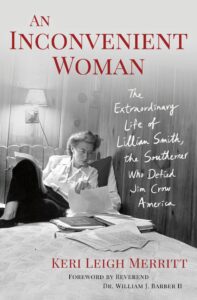
An Inconvenient Woman: The Extraordinary Life of Lillian Smith, the Southerner Who Defied Jim Crow America by Keri Leigh Merritt is available from St. Martin’s Press, an imprint of St. Martin’s Publishing Group, a division of Macmillan.

Keri Leigh Merritt
Keri Leigh Merritt, Ph.D. is a historian and writer. Her first book, Masterless Men: Poor Whites and Slavery in the Antebellum South, won both the Bennett Wall Award from the Southern Historical Association as well as the President’s Book Award from the Social Science History Association. She has co-edited several other books, including After Life: A Collective History of Loss and Redemption in Pandemic America, and her articles have appeared in outlets from Smithsonian and Aeon to The Hill and CNN.