Eight Books to Read If You’re Still Thinking About the Roman Empire
Michelle Berenfeld Recommends John Williams, Ursula K. Le Guin, Robert Graves, and More
Now that our president is minting gold coins with his face on them, building a triumphal arch, and sponsoring blood sport in the capital, it seems like a good time to read up on ancient Rome. That’s what I was thinking when I wrote Lessons from a Lost Republic: What Ancient Rome Can Teach Us About This American Moment. It explains how the ancient Roman Republic collapsed into autocracy and how we might prevent it from happening to us. For those who might want to learn more about the messy world of ancient Rome, I recommend starting with historical fiction and an ancient Roman epic. While others are busy poring over Marcus Aurelius’s late-life musings about how to be a better Roman emperor (hint: slaughter “barbarians,” persecute Christians, choose your idiot son as your successor), you can enjoy these books instead.
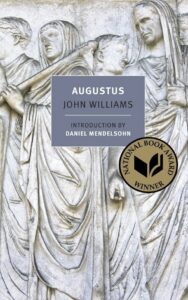
John Williams, Augustus
This 1972 novel about the rise of Augustus—the man we call the first Roman emperor—is told almost entirely by those who surrounded and enabled him. The transition from republic to autocracy is narrated through (imagined) letters and journals of his closest advisors, friends, and family. Even for those of us who know what happened, the author creates an intimate view of this extraordinary period through the inner thoughts and conflicts of the aspiring emperor’s closest confidantes (imagine a novel about Donald Trump told entirely through Pete Hegseth’s Signal chat and Melania’s diaries, but beautifully written). Augustus is at its most compelling when we hear from his exiled daughter, Julia, who does not get her say in the historical sources, but whose tragic fate is sympathetically drawn in this novel.
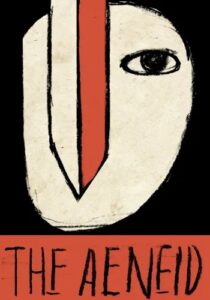
Virgil, The Aeneid
There is perhaps no greater Roman writer than Virgil (apologies to another recommended author, Ovid, below) and no greater Roman poem than the Aeneid. It is an epic in the mold of the Iliad and the Odyssey, but written centuries later by a poet working under the watchful eye of a still-figuring-it-out Roman emperor. In the Aeneid, Virgil crafts the story of Rome’s distant past in a way that “predicts” the best possible version of the world he was actually living in. Even if he did not necessarily believe it all, Virgil shaped the story of Rome and Augustus into a masterpiece. If you think you don’t know the Aeneid, imagine the story of the Trojan Horse and thank Virgil. I don’t think he is credited in Christopher Nolan’s Odyssey, but he probably should be.
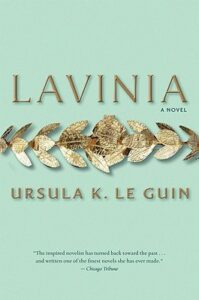
Ursula K. Le Guin, Lavinia
If you find yourself missing Virgil after the Aeneid, you can turn to this lesser known, but brilliant novel by Ursula K. Le Guin. It is an early contribution to what is now a cottage industry of stories told from women’s points of view in classical mythology. Lavinia was the young woman whose hand in marriage was promised to Aeneas, the hero of Virgil’s Aeneid and founder of the Roman people. Her role in the origin story of Rome is crucial but unvoiced. Le Guin not only gives Lavinia something to say but also conjures her whole life and her world as they could have been or should have been. A brief but essential bit of science fiction provides the marvelous, impossible conceit that gives Lavinia agency she never had even as she remains a character written by a man in the future. She knows what is to come but makes her choices and lives her life in a magnificently described world. Le Guin’s version of pre-Roman Italy is the version I now imagine whenever I read the Aeneid.
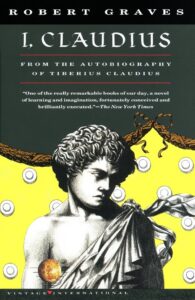
Robert Graves, I, Claudius
A saga of the first dynasty of Roman emperors in all of their back-biting and conniving glory, this 1930s novel inspired a soapy 1970s mini-series that set Derek Jacobi up for a lifetime of wearing togas on the silver screen (I once asked AI to generate a picture of a bust of a Roman senator and it made one with his face). Extrapolating from salacious and rumor-filled ancient sources, the novel offers an inside scoop into the machinations of the first Roman imperial family. It paints a picture of Livia, the wife of Augustus, as someone not to be trifled with, unless you like your figs with a dash of poison. A huge bestseller over the decades, it remains in print. Graves wrote another novel about a different famous family of the first century CE—it’s called King Jesus (good, but not as good as I, Claudius, imho).
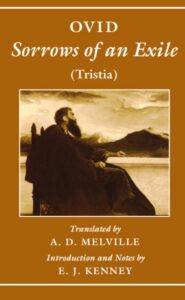
Ovid, Tristia (“Sorrows”)
No one is sure what the Roman poet Ovid did to tick off Augustus, but whatever it was, it got him exiled to a seaside town in Romania for the rest of his life. Although a nice enough place, it wasn’t Rome, and Ovid never stopped complaining about it or trying to get the emperor to let him come home. The Tristia is a series of poems describing his exile and making a case for forgiveness. It even includes a poem that addresses the book itself, telling it how to present itself when it gets to Rome. Ovid’s Tristia is less famous than his magnum opus, the Metamorphoses, but if you want to know what it is like to be a once-famous artist who gets on the wrong side of an autocrat, this is for you.
__________________________________
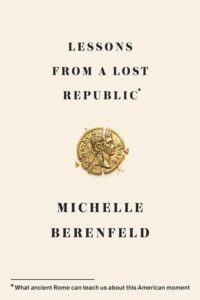
Lessons from a Lost Republic by Michelle Berenfeld is available from Spiegel and Grau.

Michelle Berenfeld
Michelle Berenfeld is the John A. McCarthy Professor of Classics at Pitzer College, one of the Claremont Colleges. An archaeologist and fellow of the American Academy in Rome, she has done research in Turkey, Jordan, Egypt, Greece, and Italy. Her work has appeared in The Atlantic and numerous scholarly publications. She lives in Los Angeles.