Dorthe Nors on Striving to Write Emotionally Resonant Fiction
“As we know from the study of Goldilocks, fiction carries the deepest truths.”
I published my first novel twenty-five years ago. It was not a masterpiece, but to me it was a miracle. Unboxing was still a private phenomenon back then and I remember looking at the book in disbelief. There it was in the box, and I found I didn’t care much about how it would be received. The fact that I wrote it and that it made it into the world with a real ISBN was the focus of my celebration. It existed!
I gave my mom the first copy of my book. My mom had dreamed of becoming a painter. She had a teacher who supported her. He believed she had talent. But her lower middle-class rural background and gender made it hard in the early 1950s. Still, she wanted to provide for herself, so she fought to get an education, any kind would do, and she became a hairdresser. I’m her third child and the only girl. The story goes that I was born in the middle of a perm and the customer, with her curlers and all, was still sitting in her chair when I was delivered in the bedroom next door.
When I turned eight, my mom went back to school to become an art teacher. The dream caught up with her. Not in the original form, but still. It was as monumental as unboxing my debut back in 2001.
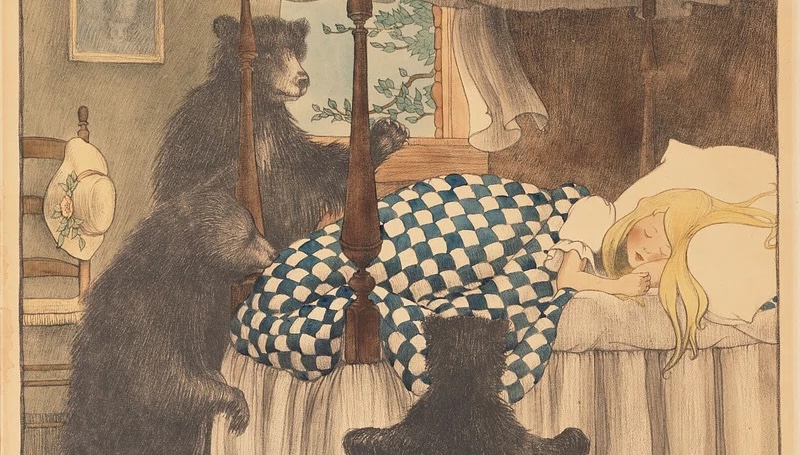
According to the original story, Goldilocks is a naughty girl, but I can’t help but see a child on the quest. She’s looking for the perfect place, isn’t she.
The second copy I gave to my schoolteacher. Let’s call her Laura. I wrote a personal dedication. Then I biked to her house in the rural village where I went to school as a kid. I walked straight up to her door, knocked on it, and when she opened, I handed her the book. Shaky hands, a little embarrassed. As far as I remember my dedication read: Dear Laura, Thank you for teaching me how to write.
From age six to fourteen Laura oversaw my reading and writing skills. It was easy to see that she was moved by the dedication, and yet she corrected me: I only taught you the letters, Dorthe. I didn’t teach you how to write.
I’m not sure this humble response is true. What Laura did was notice that I was a chatterbox and that I got easily bored. Therefore she provided me with books. Over time she would secretively hand me advanced tasks. She made me write “just a little play” and turned its passages into theater for my classmates and me. It was as if she pointed at the walls surrounding me and with a piece of chalk drew a door. An exit, a way out, a future.
I’m convinced Laura was the first person to tell me about Goldilocks. This strange girl who wanders around alone in the middle of nowhere and then enters a house that belongs to gentle bears. The bears have just cooked porridge and have gone for a walk while it cools off. In comes Goldilocks; grabs a spoon. The first spoonful’s too hot, the next is too cold, and the third’s just perfect. She sits in chairs and rests in beds until finally she’s content. According to the original story, Goldilocks is a naughty girl, but I can’t help but see a child on the quest. She’s looking for the perfect place, isn’t she. The spot where you feel safe but not imprisoned, free but not lost, warm but not burned, cold and yet not freezing. She’s looking for her zone: The Goldilocks zone.
*
What happened was that I wanted the protagonist of my tenth book, Range to have a job that wasn’t close to my own. I wanted to be challenged! I decided to make her an astrophysicist and I called her Gunn. To give Gunn a field of study, I got in touch with The Niels Bohr Institute in Copenhagen. There I met a helpful professor called Johan P. U. Fynbo. He and his team are looking for the moment when the first light broke through the dark and cold of the young universe.
I soon understood that Professor Fynbo and I have very different and incredibly similar jobs. He’s using math and I’m using language, but were both trying to figure out things like: How did we get here? What are we here for? What is life? I also learned that astrophysicists use tools from my toolbox to make their work understood by laymen. They use metaphors, for instance. Professor Fynbo once told me that his job was like looking for “glow worms in the dark.” That’s poetry.
Like all fairytales, the story about Goldilocks wishes to teach us something using a magical form that makes it emotionally hard for us to forget.
I wasn’t looking for Goldilocks when she appeared in my research. She walked right into an article about life on other planets. No longer on the quest for porridge but now an example of life itself. I read that if we look for life in space, we should look for the planets that are in the Goldilocks distance to a host star like the sun. Like our own beautiful watery planet. Traveling through the darkness of space, orbiting a light. Placed exactly where it’s not too hot, not too cold, just in the perfect distance to a star.
Or a mom, or a dad, or an aunt, or a teacher, or a bear.
Like all fairytales, the story about Goldilocks wishes to teach us something using a magical form that makes it emotionally hard for us to forget. It tells us an important truth about growth and becoming. We must be in a healthy range to a source that has a strong capacity for care. A host star. Too close to the source and our dreams will be burned to ashes by the needs and personality of the host itself. Too far from the source and we’d be so cold and alone. The best place for a kid—and a planet—to be is in the Goldilocks zone. That’s where life thrives. Planets and humans. Remember the connection.
In my new novel, I gave Goldilocks the more common name Jenny, and I let her seek out Gunn, or the Professor as the locals call her in the area where they live, a place of dark skies and neighbors. Jenny is a strange child, weird you could say, but she’s also helped along by her caring mom, the hairdresser.
It’s fiction, of course. But as we know from the study of Goldilocks, fiction carries the deepest truths.
_______________________________
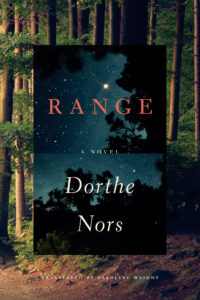
Range by Dorthe Nors, translated by Caroline Waight, is available from Graywolf Press.
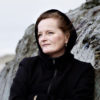
Dorthe Nors
Dorthe Nors is the author of the story collections Wild Swims and Karate Chop; four previous novels, including Mirror, Shoulder, Signal, a finalist for the Man Booker International Prize; and two novellas, collected in So Much for That Winter. She lives in Denmark.