Dogs in Guatemala are like this. It’s what Molly would tell the teenage student beside her, weeping in the street over yet one more brutalized stray, if only it weren’t the worst possible time to stop and give explanations.
Molly touches the girl’s sharp-boned back. “Come on, Naomi. We shouldn’t just hang around.”
Naomi’s knees thump the pavement. With a half-suppressed wail, she reaches after the dog. His muzzle inside an old bean can, he wanders the edge of this scruffy park: no sound but the clank of the can on hard dirt, the dog’s tail dragging and rustling like a sullied white train. Cocker spaniel, most likely—one of the cute, cuddly breeds the dog vendors specialize in. By day the vendors camp out in this park, middle-aged women who stand on the curb with crates of wriggling dogs at their feet. They’ll dangle a fat furry handful of cocker spaniel or poodle over the morning-rush traffic. Sometimes they set a couple of puppies atop a high stack of boxes, so high the dogs cannot jump down.
For two years, Molly has seen this. After breakfast, once the sun’s up—when it’s safer—she walks from the Peace Action apartment in Zona 1, Guatemala City’s decrepit old heart, to buy the paper in Parque Central. She reads it aloud to her teammates, who have lived here so long they dream nightly in Spanish and are saddened but no longer shocked by the news: university students kidnapped as they step off their campus; a well-known journalist’s house set on fire; a judge on the Constitutional Court shot through the head in his driveway. Reporting these matters to Peace Action’s Washington office, or to people who come on two-week learning tours, is Molly’s job. Here is what happened, and how, and to whom. The follow-up question must always be, What can we do about it? Americans who hear, or better yet see, the human effects of this war will—it is hoped—protest their government’s funding of it, the weapons and military training that the U.S. supplies.
The dog hawkers, however, don’t fit into any Peace Action report or lecture to visiting students. They are one of the sights Molly tries to pass with lowered eyes, the dogs aquiver on their wobbly box towers, stranded in midair. Now here, before daybreak, is one of their lot—a runaway, or forgotten?—snuffling among empty Tortrix bags and day-old tabloids that litter the park, and no one’s around except Molly, who wants to keep moving, and this young college student supposedly in her care.
“I can’t leave you out here alone,” Molly says.
It’s the end of the third decade of civil war in Guatemala, the tenth year of the military’s scorched-earth campaign. They have burned whole towns to ashes, along with the
people inside. Draining the ocean to eliminate certain fish, as one General notoriously put it. Meanwhile death squads patrol these streets every night, in black Chevy vans with black-tinted windows—hunting down activists, union leaders, reporters. Anyone who might still support the guerrillas and their revolution, which systematically is being wiped out.
“Poor puppy, can’t we help him?” Naomi begs from her knees. “Look at him. He must be lost.”
Minutes ago, Molly arrived at Casa San Juan, the guesthouse where Peace Action’s visitors stay, to have an early breakfast with this delegation of students. But the first thing the other kids said was that Naomi had coaxed one of the cook staff to let her outside so she could go for a jog. Molly turned and banged out the door and didn’t stop running till she saw the ponytailed figure, silver and gleaming in her Gore-Tex tracksuit, crouched at the edge of this park.
“We can’t do anything for him,” says Molly. “We need to get off the street.”
Aware of them now, the dog shakes loose the can—his forelock matted, his jowl smeared with beans—and shrinks into the trees with a whimper that makes something tighten in Molly’s own chest. She could pick him up in one sweep, zip him into the front of her sweatshirt.
“Oh my God,” gasps Naomi. Dropping onto all fours, she follows the puppy farther into the park. The tattered cypresses and long-needle pines damp out the shine of her tracksuit, closing swiftly around dog and girl.
Molly runs both hands through her hair. “Give me a fucking break.”
No one but the rats enjoys being out after dark in Zona 1. Under most circumstances, Molly would stride at a good clip; she’d grip her Mace or her pocketknife. Yet she chased Naomi without a thing in her hands, no thought in her head but to bring this girl back, and now the image she’s pushed down for an hour won’t leave her alone anymore: the man who spent the past night at her house, in secret. A member of the guerrillas, who arrived after supper and bedded down on Peace Action’s spare cot.
“He’s just on his way through,” Rubén said when Molly answered his knock yesterday. “He needs a hiding place just for tonight.”
To ask for this favor in person, Rubén had come from his human rights office in Zona 9, one of the new neighborhoods wheeling out from the city’s old center like a graph of centrifugal force. He never said guerrillas, of course. Among themselves, they say los compañeros, or los envueltos, the involved ones.
“Rubén, no sé,” Molly told him. “We’re here to work with civilians, you know that. We have to act like we’re neutral.”
Rubén sank his voice lower. “I’m sorry to ask. We would do it ourselves, but—we can’t keep him this time.” Around his lips, his skin had gone pale as the color of scars. “We think he’s been seen at our place.”
“Bring him, then,” Molly said. “Just for one night.”
The guerrilla had come to the Peace Action house around nightfall, looking strained and half-starved in his borrowed clothing: a pair of khakis several sizes too big and a polo washed thin. He slept on the cot and left again early this morning, before Molly did, presumably looking the same. During his refuge with them, the man barely opened his mouth. Feeling equally tense, Molly and her teammates hadn’t tried to make conversation.
But the guerrilla will not stay quiet inside Molly’s mind; he keeps moving in back of her eyes. “Naomi!” she calls in a whisper. “Let that dog be, and come on.”
Molly takes a step into the park; it’s like wading into cold water. She finds Naomi kneeling on dirty grass by a bench, under which the puppy keeps up his whine.
“What were you thinking, coming out at this hour?” Molly says to her back.
“I needed to get out. To do something, for once, on my own.” Naomi pokes head and shoulders under the bench.
“Well, you can’t,” Molly says, wincing. She has failed to explain that men use parks pretty freely as open-air urinals. “You shouldn’t. Not without one of us.”
As if from a distance, she can see how this looks: the moon scraping the apartment block roofs behind them, throwing the last of its light on a frightened dog and two foreign women, none of whom where they ought to be. From an open window one street away, ranchera music drifts through the trees. Molly feels so exposed, she might as well be walking around with her skin peeled from her bones.
Then she hears something else. Psst, gringas, grin-guiiitas.
She spins around, scanning the brink of the park and beyond it the poorly lit street, narrow as a tight-lipped frown.
“Váyanse a casa, gringuitas.”
This antagonist, surely, is just a generic catcaller. Surely no one’s been watching her house.
“Go home, gringas,” sings the man in the dark. “We know you’re up to no good.”
Naomi withdraws her head from under the bench. “What’s that guy saying? What’s going on?”
“Nothing,” says Molly, and hauls her up by the elbow. It’s a mercy this girl speaks no Spanish. She doesn’t let go till they’re out of the park and making for Casa San Juan. As far as she knows, no one follows.
“It’s not fair. It’s so awful.” Naomi sounds teary. “I hate how people treat their animals here.”
Molly counts her days left with this group of students: ten down, two to go. Changing hearts, changing policy, is Peace Action’s slogan, and while convincing a Congressional aide or a New York Times reporter to join their delegations would be ideal, it’s mainly church groups and university clubs that promote global awareness. The visit, for some, is too much. After days in Guatemala City’s orphan-filled slums and internal refugee camps, there’s often someone who ends like Naomi: fixating on animal life. It’s as if they give up, Molly privately thinks. They squeeze a week’s accumulation of horror and grief onto the dogs or the cats—objects of suffering that still make some sense. Whose pain is small enough to imagine.
Some of her own teammates show signs of weakening, too. Only this month, Dean had to dash from the cineplex during the goriest scene of Platoon, to be sick in the manicured bushes of Zona 10. And Yvette will not leave the house after dark anymore, not since she saw a student outside the Universidad de San Carlos get taken by a death squad.
“He froze when he saw them,” Yvette kept repeating when she got home. “He just fucking froze.”
“Why didn’t he run?” Molly said. She couldn’t get over this detail. “I would’ve run.”
“You don’t know what you’d do, if it was you.” Yvette slapped the table between them. “If you resist, those guys break your legs. Then they can get you in their van.”
“You could at least try,” Molly countered, feeling she’d been struck herself.
But the next day, when Yvette wouldn’t get out of bed, not even for dinner, Molly found herself praying again, a practice she thought she’d abandoned along with her redneck hometown.
“Do you ever think,” Yvette said that night, when Molly brought her a tray, “this isn’t our war? It isn’t our country. What are we doing here?”
In her darker moments, Molly does wonder. What is Peace Action for? What has she really accomplished? They’re educating a few dozen gringos a year on U.S. policy in Guatemala, preaching the gospel of solidarity to people who already believe. But Molly didn’t answer Yvette, and Yvette rolled away toward the wall.
“We ought to think about leaving,” she said when she finally got up. “It’s getting too dangerous here.”
No, Molly thinks, hurrying Naomi on toward the guesthouse. When she joined Peace Action, she signed on for three years; they all did. No matter what Yvette says, Molly’s not backing out now. You just have to say to yourself, my life in this country is going to be different. Then you move on; you keep going.
Dogs in Guatemala are like this. Their downstairs neighbors have acquired a dog of their own, a hulking black Rottweiler mix. Whenever they leave the building, Tomás and Olga unleash the dog in their foyer, unshutter the iron-barred window in their front door. Let someone walk by within twenty feet: the dog hits that door like a cannonball. It must be dented on the other side. He doesn’t just bark, he roars. He dives through the window at the top of the door as far as his huge head permits—fangs bared, eyes rolling. Perhaps he’s lost his mind. When he’s not playing guard, the dog is kept penned up, alone—Tomás and Olga freely admit—in an air shaft in back of their rooms. Coming and going, Molly cannot avoid him; he sprays her with drool every time. But she cannot get used to him, either, can’t stop her adrenaline blazing.
Molly pats Naomi on her Gore-Tex sleeve, where a reflective stripe glints as they pass this block’s streetlight. Then she drops her view to the gutter, and for a single cold moment all conscious thought stops. There’s just enough light to see a man sprawled there, face-up, arms flung in surrender. His eyes are open as the eyes of a fish, boned and gutted and laid out on ice, and where his throat used to be is a dark open welt, like a mouth underneath his real mouth. His polo shirt at the waist is still yellow, but from collar to chest it is flushing with blood, wet and shining.
Molly jerks to a halt before her mind catches up. It’s true, at this hour, in this city, corpses show up—members of activist groups in the gorge behind the National Cemetery, street kids by the municipal dump—but not here, not in this neighborhood where she lives, nearly at the doorstep of Casa San Juan. So far, not here.
“What is it?” Naomi asks, blinking.
“Nothing,” says Molly again.
Holding on to the girl, she picks up the pace. The man lies a few yards behind them, but the image stains her field of vision. Yellow shirt, yellow shirt still yellow above his beltline, yellow shirt turning black-red. Did he wear a yellow shirt this morning? Has she just seen him—the clandestine soldier, the man she harbored last night? In the two years she’s lived here, Molly has not said the word guerrilla aloud. One of the many small safety measures she and her team try to take. But if that really was him in the gutter, if he got his throat slit as he left her house, what do such precautions matter? Who’s to say the army’s henchmen are not stalking her now?
So this is how she might die. Today, in the street before breakfast, taking an innocent bystander in a Gore-Tex tracksuit down with her. Because these may be her last moments, Molly sees everything almost too clearly, as if someone has floodlit this city block: the crumbling colonial mansion repurposed as a triple-X movie theater; a sheaf of bougainvillea bursting over the wall of someone’s secluded front yard.
“You’re hurting me.” Naomi pulls free of her grasp. “What’s wrong with you?”
Just keep moving, thinks Molly. As the old theater and the wall with its cascade of flowers slide slowly past, she says nothing more—sees nothing but the bluish fluorescent glow through a distant grilled window, brightening with each step, that she knows to be Casa San Juan’s.
*
Molly’s own mother remains in a state of denial about where Molly has gone. “We’re having the most beautiful sunset this evening, aren’t you?” she’ll ask on a June phone call. And Molly will say for the ninety-ninth time, “This isn’t Oregon, Mom. We’re closer to the equator, right? The sun sets much earlier here.” But Molly’s mother isn’t ashamed. She says, “Oh, I can’t keep track of these things.”
When she left the States to work for Peace Action, Molly had felt to the soles of her feet that it was the right thing to do. If President Reagan was bent on calling the war in Guatemala an issue of good versus evil—with America, as always, on the right side—and if many Americans were too dumb to challenge this point, she’d at least do her part to prove him and his acolytes wrong. She’d go and live in that war zone. She was full of her sense of good-doing, of worthwhile adventure. No matter if some people at home believed her insane, basically.
Even Dra. Núñez, her old Spanish professor, balked at the notion when Molly went to tell her goodbye. “I’ll picket and protest from this side of the border till I turn blue,” she said. “But going to Guatemala these days? Querida mía, not on your life.” She held Molly’s arms, then shook them like a loose pair of reins. “You know you’re not invincible, don’t you? It must be those damn cowboy movies you white people watch.”
Molly walked away from that exchange slightly angry and flushed. She had been twenty-four then: too naïve to be scared, or so Dra. Núñez seemed to imply. Too young to measure the risk.
And yet, hadn’t she at the start been in love with that risk, with the sense of herself as endangered? However slightly, however improbably. Which—it seems obvious now—is the only way to love danger.
*
Stucco over cinderblock, one square window behind ornate bars: Casa San Juan resembles all other buildings on this stretch of Sexta Calle. When Molly pushes the bell, the housekeeper, Gregoria, slides open a panel about six inches high in the door. Visitors give their names through this slot, to be checked against a list the guesthouse updates every day. But Gregoria knows Molly well.
“Adelante,” she says, holding the front door ajar.
“Please, I need the phone,” Molly says.
Gregoria points her to the kitchen, where the old-fashioned black telephone hangs by the stove. Receiver pressed to one cheek, Molly listens to the bleat at the line’s other end, in the Peace Action apartment.
“¿A-ló?” says Yvette, her voice cracked with sleep.
“It’s me,” Molly says. As if it’s been etched on the brick wall beside her, she sees the image she must convey. But language sticks in her throat.
“Molly? What’s going on?”
I saw a dead man—a murdered man—near our house. It’s not something one says on the phone, not directly. For such occasions, she and her team have evolved a rough code. “G” for guerrilla, “Smurfs” for the cops. But what do they call a dead body?
“Yvette. I saw—I saw a blackbird this morning.”
Between them, the phone line buzzes: empty air. Then again, probably not empty. Someone else, some government spy, almost always is listening in.
“You saw a what?” Yvette says.
“A blackbird. I saw a blackbird.”
“Oh.” Molly hears the meaning slam into Yvette. “Oh, holy Mother of God.”
It’s too strong a response; they both know it. Somewhere nearby, in a dark office, an eavesdropping oreja has just jerked to attention on his hard little chair.
“Not—not the G? Was it the G?”
“I don’t know,” Molly says, fighting tears. Send me a sign, she started praying a few weeks ago. Should she have prayed differently? “I couldn’t see. It might have been.”
“Holy Mother,” Yvette says again, muffled—perhaps speaking through her own hand.
“Listen,” Molly says. “I just wanted to tell you—stay put this morning. And maybe don’t answer the door.”
“But—where was he? I mean—it? The, uh, the blackbird.”
By the street. In the gutter. These verbal stratagems seem so pathetic. Can’t a well-trained oreja hear through their code? At the corner of Sixth Street and Third Avenue. But that’s no better, giving coordinates over the phone.
“Yvette? I should tell you the details in person.”
“Right. I can’t think. I’m sorry.”
“I’ll be home soon. I’m just checking in. Try to get hold of yourself.”
“But we should tell someone—do something—”
“You should get off the phone. Take a breath. Go lie down.” It’s the wrong suggestion to make to Yvette. “Better yet, go do some work.”
“I’ll send Dean over, to walk you back home.”
“No, I don’t need that,” says Molly. “I’ll be there in ten minutes, tops.”
In Casa San Juan’s vestibule, she rings for Gregoria to unlock the door. But it’s Naomi who rounds the hall corner—changed into jeans and a bright Maya vest from the city market.
“I overheard you just now, in the kitchen,” she says. “You were reporting what we saw outside?”
“Something like that,” Molly says.
“But we saw a puppy. Why did you keep saying bird?”
In lieu of an answer, Molly jiggles the doorknob. It’s pointless: it’s locked. Why won’t Gregoria come save her?
“Don’t you trust me?” Naomi insists. “Is it because I freaked out?”
“It’s not that,” Molly says. “That happens.”
“I know you saw something else.” Naomi leans closer, but her eyes are too dark—a brown moving toward black, too much like the eyes of that other as the streetlight had caught them. Brown and round with surprise. “I came to Guatemala to know things. Not to have you cover my ears half the time. I didn’t come here to be protected.”
“That’s not always a bad thing,” says Molly.
Last month, when someone broke into Tomás and Olga’s apartment and wrecked it—hurled cups and plates to the floor, hacked sofa cushions with a machete—everyone in their building knew it was no random act. Tomás, the leader of a labor union, has received death threats before; the break-in was one final warning. Nobody called the city police; the police, controlled by the army, were likely in on the crime. But a day later, the furious Rottweiler took up his post in the foyer.
“Ai, perdón, señorita. Sorry to keep you here waiting.” Like a godsend Gregoria appears at a jog, her ring of keys chiming. But she stops when she sees Molly’s face. “¿Cómo se encuentra?” Are you all right? “When you went after that jovencita”—Gregoria cuts her eyes at Naomi—“did something happen out there?”
“Ah,” Molly says, aware of Naomi watching and listening, even if she can’t follow each word. “I saw—we saw—a lost dog in the park.” In a way, it’s the truth: the part she’s able to tell. But the weight of the real story, the one she’ll leave out, sits like a stone in her skull. “The dog made us feel sad,” Molly says.
Gregoria nods, grim but unfazed. “You should rest. You should sit for a minute.”
Molly says, “I’ll be fine.”
“Take these, at least.” Gregoria produces a compact small bundle, wrapped in a striped servilleta. “Tortillas from breakfast. You’ll eat them, won’t you? Your students aren’t eating them. But all of you in Peace Action do.”
Molly looks past the bundle to Gregoria’s huipil, embroidered with blue and green birds in the style of Gregoria’s hometown in the mountains, which she fled six years ago. Perhaps this huipil is the one she put on that final morning, before the first gunshots, not yet guessing what the day held.
“How do you stand it?” Molly hears herself say.
She’d bet a thousand quetzals Gregoria knows what she means. Gregoria, who lost the rest of her family in the space of an hour. But Gregoria shakes her head slightly and fits the warm pack of tortillas into Molly’s hand.
“Hold on to this,” she instructs, as if it’s one possible answer, because there’s no possible answer. And lets Molly outside again.
Below the door, Sexta Calle still lies in shadow, but the tops of buildings across the street are slashed with pink light, and Molly breathes in the morning: woodsmoke and parched corn from a dozen elote stands; a chemical whiff of the city dump, heating up; papaya and pineapple rinds in the gutters, shedding their distinctive smells. Putrescence and sweetness at once. And beneath this torrent of odors, something else, something new, a fetor like wet ink or mud, or like a fish just after it’s caught.
“You’re keeping secrets,” Naomi says from the doorway behind her. “I know you’re not telling me something.”
Molly says curtly, “That isn’t your business.”
The girl makes a sound of disgust. Could she be the sign Molly’s seeking—an accusatory spirit in a Maya vest, come to prove that whatever good Molly thought she was doing is, after all, fantasy?
Naomi says, “It feels like you’re choosing what the rest of us do and don’t know.”
“Don’t be silly.” Molly keeps walking away. “You don’t always get to choose what you know.”
*
She goes home a roundabout way, past the intersection where street kids juggle limes, past the corner of teenaged fire-eaters—whose trick is first washing their mouths with lighter fluid. On the next block she says No gracias but nods to the flower sellers who walk with arms stretched to encompass paper cones full of roses, like the wings of birds spread to show off their pied undersides. Rosas, rosas, muy finas rosas. Roses in the colors of the rainbow’s top half.
Molly follows the street lined with optical shops, then the calle of cheap Chinese restaurants. She cuts through Parque Central, where the boys who hang out at the taxi stand shout ¿Taxi? ¿Taxi? no matter how often they’ve seen her before and know that she likes to walk. ¿Le ayudo, señorita? Need some help, señorita, you need a ride? They live, it seems, for the purpose of hailing all passersby who might be on their way someplace else.
This hour of day, as Guate sloughs off the dark, Molly remembers why she has loved living here. Parts of this world still go on giving her pleasure, and when people ask what these are—as some Peace Action delegates do, once the rush of arrival wears off—what
makes her list? Semana Santa, for one: the whole decadent week. Fog on the Cuchumatanes. That time she and Yvette watched a sea turtle at Monterrico waddle onshore to lay her eggs on the beach. The bus ride from Guate to Huehue, if she gets a seat by the window. Lake Atitlán, that one’s easy. Anywhere, really, on Lake Atitlán. The way people here take her into their homes with such kindness and grace. Once, these felt like an endless plenty: reasons enough to remain.
But at the junction of Sexta Calle and Tercera Avenida, Molly’s feet drag. Up this street, an hour ago, she’d seen the man in the gutter. Had he seen her, too? She can’t shake the feeling that he had stared back.
“¿Señorita?” says someone above Molly’s head. “Señorita, are you unwell?”
Molly finds herself sitting on the stoop of Pizza City, a hole-in-the-wall restaurant where she sometimes eats lunch. Looking up, now, at its owner.
“Con permiso, Doña Marta, sorry. I guess I felt faint.”
Doña Marta steadies her as she stands. “¿Verdad que estás bien?”
“I’m fine,” Molly assures her. But the bundle of tortillas weighs more than it should as she turns toward her apartment again.
Now here comes Yvette, walking swiftly with her head down. I thought we agreed you’d stay put this morning, Molly starts to say. Then she sees the red plastic dustpan in Yvette’s hand. Yvette has been sweeping the steps of their building. “Makes me feel more like a Guatemalan housewife. Like I fit in,” she’s been known to explain, though Yvette’s humor—as with her step-sweeping routine—has grown increasingly sparse.
“Feeling better?” asks Molly.
Yvette’s face looks bloodless beneath her suntan, and she holds the dustpan out strangely, like a tray she must balance, with the dustpan brush laid on top. She shoves Molly backward, through Pizza City’s front door.
“Better come with me,” she says.
Apologizing to Doña Marta—Con permiso, ya regresamos—Yvette aims for the bathroom in back, and Molly begins to guess why. Some topics they cannot discuss in their house. They dodge tables of Zona 1 office workers eating eggs, drinking coffee—there’s no pizza served until lunch—and step over the semi-feral black cat who prowls the floor, hunting scraps. Yvette opens the door to Pizza City’s lone toilet, engulfing them in a bouquet of Pine-Sol and damp cinderblock and the earthier smell of the small weedy lot where the bathroom’s rear wall ought to be. Every year there’s a half-dozen kittens growing up here; they meet you, en masse, at the door. Today, however, sensing the panic as Yvette and Molly whirl in, the kittens scatter back into the weeds.
With one hand Yvette slides the bolt; in the other, she keeps the dustpan horizontal. Then she notices Molly’s own cargo. “What’s that?”
“Tortillas. From Gregoria—from Casa San Juan.”
In response, Yvette gives her dustpan a shake. Something rattles against its hard sides.
“What’s that?” Molly asks.
“Ah,” says Yvette, extending the pan. She lifts the brush off what it’s been hiding.
Teeth. Human teeth? Teeth, all by themselves. Five—no, six of them. Molly at first can’t attach any meaning to this.
“No,” she says. Then she says it again, as if she can refuse the sight.
“I went down to sweep the front steps, and there they were, waiting.” Yvette keeps her gaze on the pan. “They were arranged, in a half-circle. Like a little half-moon.”
The teeth are dry, small irregular cubes, light yellow against the red pan. Their roots are jagged, dark brown. By themselves, the teeth look obscene. They belong to somebody, to somebody’s body; they should be inside someone’s head.
“Molars, mostly. Though I think that’s an incisor.” Yvette pokes at it with the end of the brush. “It’s a threat, isn’t it?”
“You don’t know they’re for us,” Molly says. “We’re not the only people who live in that building.”
“Like getting someone else’s mail by mistake?” Yvette shifts the dustpan to her other hand; the teeth make a soft sizzling noise as they slide across the pan’s surface. “Well, there’s one cultural-sensitivity issue they didn’t address in our training.”
“God, Yvette. This is no time to joke.”
“I’m not joking. The army wants you and me gone?” Yvette sounds angry again. “Then I’m gone. I’m fucking out of this place.”
“But let’s think for a second,” says Molly. “Maybe that isn’t right.”
“You think these were meant for Tomás and Olga, instead?”
Molly says weakly, knowing she’s grasping at straws, “Well, why not? As likely for them as for us.”
“Except”—Yvette drops her voice—“except they didn’t just have a G spend the night at their place.”
Yesterday morning, when Rubén arrived with his urgent request, Molly hadn’t asked how he knew their house was safer than his for sheltering a guerrilla. Perhaps already he understood what Molly is starting to now, that no matter what crosses your mind when you find a handful of human teeth at your door—whether you respond with revulsion or pity—what lingers is the impression, It might be me, the next time.
“We’ve got to stop fooling ourselves,” Yvette says. “God help me live through this day, and I’m buying a plane ticket home.”
“No,” Molly whispers. “Please, Yvette, wait.”
But they are on borrowed minutes, locked inside the only bathroom at a busy hour, and someone outside shakes the door. Yvette moves to unbolt it, holding the dustpan behind her.
Molly reaches after her, catches the edge of the pan. “Espérese, por fa’,” she shouts toward the door. To Yvette she says, “Please fucking wait for one second.”
They stand holding the dustpan between them. “Wait for what?” Yvette says.
Molly forces herself to look again at the teeth. Woman or man? Young or old? Chosen for having done what, or been who?
She says, “We should bury them.”
A few feet past the toilet, the floor drops off into dirt, as if the builders simultaneously wearied of pouring cement and ran out of cinderblocks for the back wall. The tin roof ends in midair, just above Molly’s head. The result is this odd slice of land, wedged between Pizza City and the rear of some other building, unused except by the cats and overgrown with birds of paradise, banana trees—plants that spring up anywhere. Balancing Gregoria’s tortillas carefully on her knees, Molly squats at the edge of this lot. At the base of a banana tree sapling, she digs out a hole with her nails.
“If you do that,” says Yvette, watching, “we’ll never have evidence.”
The ground is rough on the surface, bruising Molly’s fingers, but inches below it gives way, comes up in damp loamy clumps. “Evidence for who?” Molly says.
Even now, they speak under breaths. The person outside this thin metal door—the diners who sit near it, too—must be aware of them talking. What kind of people rush into a public toilet and frenetically whisper? Mainly people up to no good. Their door-rattler bangs with both fists.
“Un momento,” Molly yells over her shoulder. Everything, suddenly, depends on this task.
“Christ, I don’t know,” Yvette murmurs. But she hands over the pan.
“Well, I do know,” says Molly. She pours the teeth into the hole she has made. They crowd and click against one another, they spatter into the earth. Down there in the dirt, the teeth appear harmless as pebbles. “It’s the right thing to do.”
A year from now, this banana plant will be twice as tall. Its roots will spread over the teeth and protect them, secretly hold them. Molly scoops loosened soil back in place, tamps it down. Should they speak some words over these teeth—some sort of blessing or prayer? The only words she can find are I do know. I know.
On their way out of the restaurant, they buy Fantas from Doña Marta as repayment for use of her room. But they set their bottles down a block from their building, beside a pair of adolescent glue-sniffers drowsing against a brick wall. They drift among small fleets of schoolgirls who head to class in matching knee socks and kilts, some holding hands as girls at home seldom do.
Molly’s mind stays on what she has buried. She will always know where those teeth are; she will always see the man in the gutter. “You don’t get to choose what you know,” she told Naomi today, only to hear a final retort—“Bullshit”—flung at her back. In the country where they both come from, Molly might take her point. Maybe, in a life where you can watch the world’s miseries from your sofa, Naomi is right. Naomi, who is luckier and also less so than she thinks.
When Molly holds out her empty hand, Yvette stares at it, then shoves her dustpan under one arm, laces her fingers through Molly’s. For a minute they’re linked, walking like Guatemalan schoolgirls with their arms in a tight V between them. As they near their door, pop music unspools from the windows of their apartment into the street. Dean is playing Molly’s Sting album again. ¿Por qué están aquí, danzando solas? ¿Por qué hay tristeza en sus miradas? One of those songs that moved her, two years ago—that sent her head-long and hopeful into this job, to this place. Though Sting’s Spanish sounds a bit off, Molly has always respected the effort. Why are these women here, dancing all alone? Why is there sadness in their eyes? As good a point as any for an outsider to start: with a question, then with another.
“We’ll be all right,” says Yvette, letting go of her hand. “Now that we’re going home soon.”
Home, Molly thinks. What home does she want anymore? It’s true, no one asked her to come here. Her presence may be of little to no consequence. Even so, she does not want to leave.
As Yvette fits her key into their building’s front door, Tomás and Olga’s Rottweiler erupts into his insane-lion act. RrrooOOOWWWRRR! It drowns out all other sounds.
“Hurry up,” Yvette says. “Get inside.”
Molly stands where she is, letting it hit. In this space between her door and the gutter she listens to the roar and beneath it, the wild kennel of her own heart, thrashing and howling like all frightened things. Held to her chest, Gregoria’s tortillas have the heft and density—and almost the warmth—of a very small living creature.
__________________________________
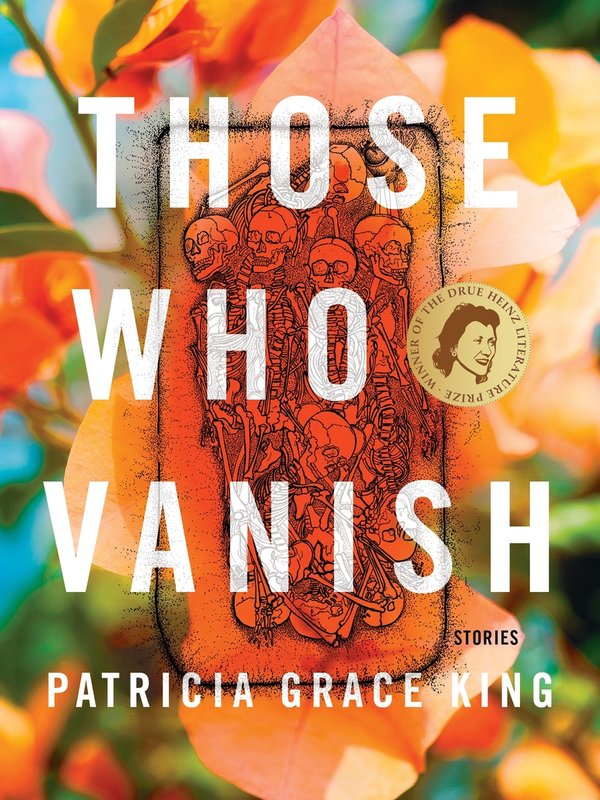
From Those Who Vanish by Patricia Grace King. Used with permission of the publisher, University of Pittsburgh Press. Copyright © 2026 by Patricia Grace King.