Considering the Many Forms a Family Can Take in Japanese Literature
Laurel Taylor on Maiko Seo’s Someone to Cook For
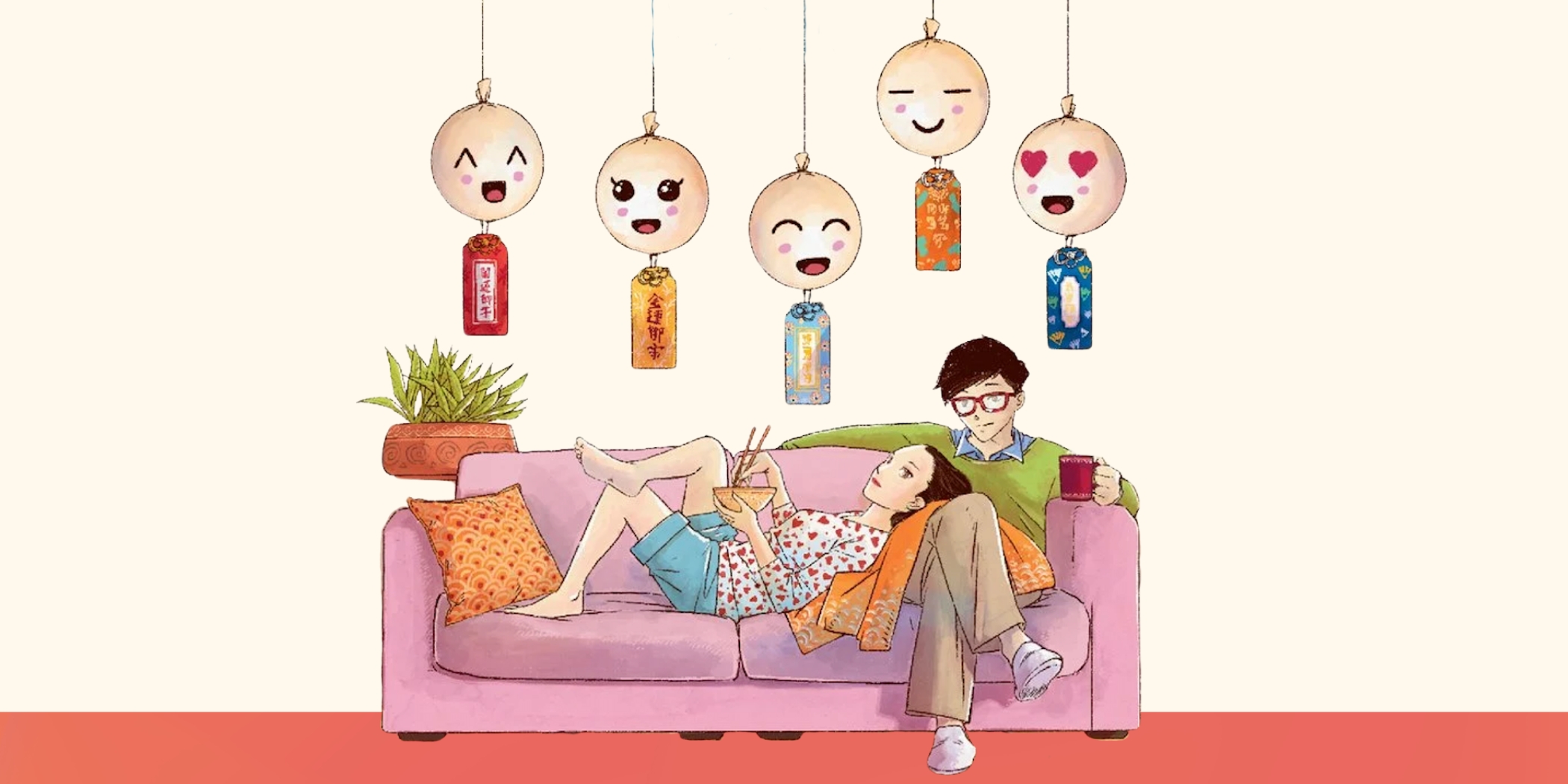
Growing up, my mother and I often joked that I was a thirty-year-old in a ten-year-old’s skin. That happens when you’re an only child with a tendency toward bookishness—you spend all your time around adults, read much more than the average fourth-grader, and generally comport yourself with the same calm and poise you imagine adults have. For better or for worse, you spend a great deal of time making your own fun with an overactive imagination, taking care of yourself while your parents work, and picking up more responsibilities and self-recriminations than is probably healthy for a ten-year-old. Little do you know that adults, even the ones who seem put together, are just as messy as the children they’re raising. Or at least, this was my experience. This is why when I started translating Maiko Seo’s Someone to Cook For (Europa Editions, 2026), I recognized a kindred spirit in the protagonist, Yuko Morimiya. She too is an old soul in a teenager’s body, bearing a mantle of responsibilities and self-conscious habits like a well-worn and familiar coat.
My upbringing wasn’t quite as colorful as Yuko’s though. Unlike me, the poor girl had had five parents by the time she entered high school. Of course Yuko would balk at my calling her a “poor girl.” Throughout Seo’s novel, Yuko insists that her unusual childhood hasn’t been the tragedy everyone seems to expect—she’s loved all her parents and all her parents have done their best by her, misguided though they sometimes are. At the same time, however, Yuko is aware that because she’s moved households and changed names so often, there is an “acute sense of distance” between her and each new guardian. Where other teenagers are pulling away from their parents, chafing to become adults already, Yuko is constantly thinking about how she can cause her parents, new and old, the least amount of friction and worry.
[Yuko] is acutely aware of her own ever-shifting identity and how it is interwoven with the people who come in and out of the revolving door of her life.
Yuko’s sensitivity to her situation is partially built on the fact of blood relations, which remain a strong determining factor in family structures in Japan. As a toddler, Yuko loses her biological mother to a pedestrian hit-and-run incident, and her father, Shūhei Mito, remarries to a woman named Rika Tanaka when Yuko is in elementary school. However, at the age of ten, Shūhei announces that his company has transferred him to Brazil. Rather than follow him to the other side of the planet, Rika requests a divorce, and she and Shūhei put the question to Yuko: will you stay or will you go? For me, this is the moment Yuko goes from little girl to a little girl trying desperately to be an adult. Torn between her love for her father and her desire to remain in Japan, Yuko ultimately chooses Rika, and from that moment on, she never lives with a biological parent or relative again.
What this means legally speaking is that Yuko is removed from her father’s family registry (koseki) and placed on Rika’s—she transforms from Yuko Mita to Yuko Tanaka, and as a result, she is no longer a legal member of either of her biological parents’ family units. Until April 2026, Japan did not have any joint custody system in place; prior that change, children could not be listed on two family registries at once. Parents could, of course, negotiate visitation rights and child support in a more informal manner, but unlike many other wealthy countries, until 2026, these parental support systems were not obligatory; children could only ever legally be a member of one household, and the other household forfeited all rights and obligations to the child. For a ten-year-old like Yuko, however, the nitty gritty details of visitation and finances are less important than the very real fact of separation. It is evident in the novel that Shūhei loves Yuko very much, but his transfer to Brazil makes maintaining a strong relationship nearly impossible.
Over the course of a year, Yuko never hears from Shūhei at all and eventually gives up on their relationship. “We might have been father and daughter, but now we were apart—our time was over. My own life was right there in front of me, and I needed to focus on the people around me.” Yuko, old soul that she is, quickly learns that Rika’s ability to manage household finances is atrocious, so she takes it upon herself to make sure she and Rika have food and can make the rent on time. Though she is the child, Yuko very much grows into a parent.
Rika, through a series of remarriages and divorces, shuffles Yuko along from family registry to family registry, and with each new household, Yuko again calibrates herself to the adults around her, a process she slowly comes to realize is not the norm in other families. She is baffled by the way her friends Moe and Fumina rail against their parents, especially when Yuko is always holding back at home, forever walking on eggshells. When she and Sōsuke Morimiya, her third father, have a fight, she’s terrified of how to resolve the matter with him.
Maybe we should open up and talk about everything, explain to each other what we believed a father and daughter ought to be. The idea terrified me. I feared if we said everything we needed to say, we wouldn’t be able to stand each other anymore—neither of us actually knew what it was to be parent and child.
Though she would balk at my words, again I say “poor Yuko.” Three fathers and two mothers deep, she is only ever unsure about what a parent looks like or how they are “supposed” to act. And because Yuko is so self-sufficient and has grown up so much faster than other teenagers, she never reaches out for help, even to those who raised her before. She is convinced that to do so would be an unnecessary burden on her former parents, especially when they no longer have any obligations to her.
Though she tries her best to go it alone, ultimately she learns she can lean on the people who care for her and listen to what they have to say about her character and her choices in life.
In the process of editing this translation, one of my editors came back to me with questions about why Yuko is so reluctant to maintain contact with the parents who are no longer in her life. There is, of course, the legal argument; with each divorce, Yuko becomes part of a new family and sheds the old. More importantly, however, whether Yuko is conscious of the bureaucracy and paperwork behind all these family ties binding and unbinding, she is acutely aware of her own ever-shifting identity and how it is interwoven with the people who come in and out of the revolving door of her life. Better to go it alone than reach out for someone who might be gone in a year, right Yuko? Again, I sense a kindred spirit in her; as my friends and family can attest, I also have a hard time asking for help, even from those who would happily give it. Luckily for both Yuko and I, very often help comes even when neither of us seek it.
In translating Someone to Cook For, I can’t add an entire paragraph or even a set of little notes here and there explaining the differences between Japan’s divorce system when compared to those in the UK or the US. What I can do is concentrate on my empathy with Yuko, on the ways in which her thought processes mirror my own. I finished translating the first draft of this novel in June of 2025 and immediately burst into tears. My father had passed unexpectedly only a month prior, and the final scene of the book had touched that part of me that was still in mourning disbelief. Rika also reminded me a lot of him—a little too focused on shopping over family finances, caring but impulsive. Unlike Yuko, my parents never divorced, but still I felt her same uncertainty when faced with my new fatherless place in the world, and I could bring that uncertainty to bear when I began editing and refining the translation.
Who are we when our parents are no longer there to serve as a guidepost for us? I think the common American mythos would have us go on a journey of self-discovery; we would strike out alone, traveling or starting a new business, trying to discover ourselves via “bootstraps” style independence. In Yuko’s story however, she discovers herself not through stubborn independence, but instead through locating new family, new parental figures and mentors. Though she tries her best to go it alone, ultimately she learns she can lean on the people who care for her and listen to what they have to say about her character and her choices in life. I only hope I can be as lucky when it comes to finding new family in my future.
______________________________
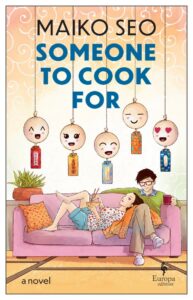
Someone to Cook For by Maiko Seo, translated by Laurel Taylor, is available from Europa Editions.

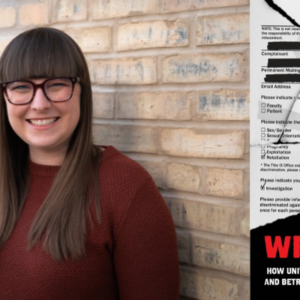
Laurel Taylor
Laurel Taylor teaches Japanese at the University of Denver. She holds a PhD in the joint Japanese Literature-Comparative Literature track from Washington University, St. Louis, and an MFA in Literary Translation from the University of Iowa, where she was a recipient of the Iowa Arts Fellowship. Her translation work has appeared in Asia Literary Review and English PEN Presents. She currently at work on the translation of Maiko Seo’s All The Long Nights forthcoming from Europa Editions in 2027.