Claire Fuller on Taking Writing Lessons from Sculpting
The What Ifs of Writing, or Carving Stone
This first appeared in Lit Hub’s Craft of Writing newsletter—sign up here.
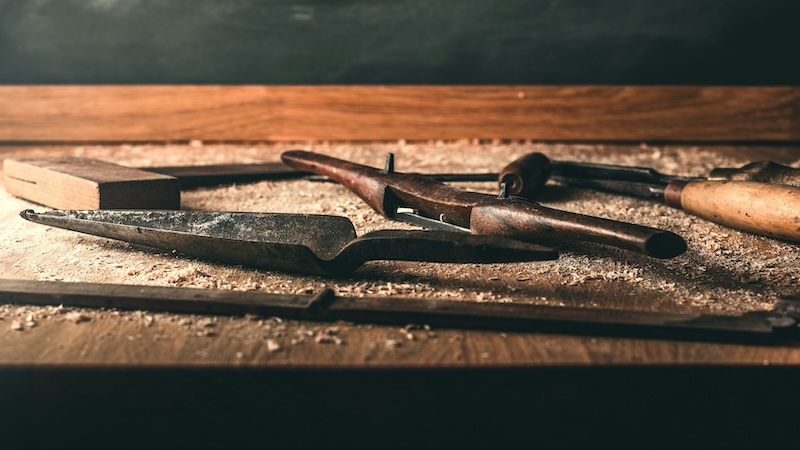
I’d been sculpting and drawing since I was sixteen but when, at forty, I started writing short stories and novels, all my desire to sculpt fell away. I still have my chisels, mallets and some pieces of stone, and sculpting became an integral element in my sixth novel, Hunger and Thirst, but it turns out I’m not one of those creatives who actively switch back and forth in their mediums. I haven’t picked up my tools in nearly twenty years, but I can still see the sculptor in my writing process and in what I create. So perhaps there is something for me still to learn from those years making visual art.
At art school in the 1980s I specialized in wood and stone carving and for a year after I left, I sculpted in the garden and garage of the squat where I lived. And later, when I got a “proper” job, and had children, I still managed one day a week in my studio making art. I always carried a sketchbook with me, and there was one year where I did a drawing a day and had an exhibition at the end of it. I sold a few sculptures over the years and was sometimes included in group shows, but I never made enough money to live off.
I started writing after I met my second husband. We’d been doing some public art projects together and I realized I wanted more of the feeling they gave me: discomfort while doing them and a huge sense of achievement afterwards. I signed up for a short story open mic night and not long after decided to do an MA in Creative Writing. I wrote my first novel on that course, and it sold to Tin House in the US and Penguin in the UK. My carving tools sat abandoned, a piece of stone half finished. Eventually I packed them up and carried on writing.
My son is a musician, and my youngest offspring draws when they’re not working. Music, visual art, and writing have a lot in common, certainly across their creative process. Perhaps they might all start with making a mess or playing around. Noodling around on the guitar, sketching a life model in one-minute poses, writing without using your conscious brain. Listening, observing, paying attention to rhythm, letting go of perfection, and tapping into your intuition.
I don’t write (and neither did I carve) with a theme in mind, or even much of a plan. Making art (writing) for me is about creating intuitively and understanding what works and what doesn’t on a gut feeling. But my own experiences, knowledge, and what I’m drawn to will arrive naturally: the repeating themes across novels, the locations I seem to prefer, the types of characters. When I’m writing a first draft, as when I was sculpting, I am trying to bypass the analytical part of my brain and ignore the voice in my head telling me what I’m doing is no good.
When you’re carving wood or stone, you have to work with the material you start with. Perhaps this is where my lack of a plan in writing comes from. You can’t have a fixed goal if you’re constantly having to work with the grain of the wood or the tiny flaws of shell and fossil that you might find inside a piece of limestone. Still, you do need to have the vaguest idea, a shadow shape, otherwise you might end up with a pile of stone dust because you’ve carved it all away. And even if I don’t know what’s going to happen in the novel I’m writing, it helps to have an idea of shape, of rising action, of a crisis that needs to be reached.
You can also ask yourself questions as you go. What if, applies to writing novels and carving stone or wood. What if I shaved this side down further, what affect would it have in relation to the other side. You can look at pattern in all visual art, and in music. In writing, pattern might emerge as the theme, recurring symbols, or how the end of the work comes back to the beginning.
But a rough first draft isn’t possible in carving. There is one chance to get it right. The only way around this is to create a maquette, a small practice piece that might be in clay or wax but it’s never going to behave in the same way as that final chunk of stone or wood. But then comes the time for revising, refining, polishing. And then, in all art forms there is the unanswerable question of when is the piece finished?
____________________________________________
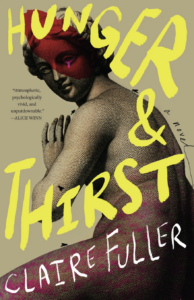
Hunger & Thirst by Claire Fuller is available via Tin House.

Claire Fuller
Claire Fuller was born in Oxfordshire, England. She has written four novels: Our Endless Numbered Days, which won the Desmond Elliott Prize; Swimming Lessons; Bitter Orange, and Unsettled Ground, longlisted for the Women's Prize for Fiction. She has an MA in Creative and Critical Writing from the University of Winchester and lives in England with her husband.