Chef Nephi Craig on the Power and Importance of Preserving Native Cuisines
The Culinary Art of Self-Determination
The sun hung low in the sky as I turned on to the path leading from Whiskey Flats to the neighborhood we’d always called Nobody’s Home. It was barely eight o’clock, a frigid morning in February, and the air smelled of juniper smoke from people’s cooking fires. I pulled my beanie down over my ears and hurried across four lanes of highway.
I was looking for the tall guy who had told me he would buy one of my high-end chef’s knives. I’d met him the night before, completely faded. I didn’t remember his name, but I could picture his face. He had been wearing a black T-shirt of some death metal band I’d never heard of, sneering while I told stories about cooking a Native food dinner in Osaka, Japan, like he was sure he’d caught me in a lie.
I pushed away the familiar sting of shame. Once again, I had managed to completely fuck up my life. I had no job, no apartment, no money—I was a grown man living in his mother’s house. No one in my life, not even my seven-year-old son, could rely on me.
I turned up the dirt driveway that led to the compact white-brick house where we’d partied the night before. My head was pounding. The yard looked much less inviting in the daylight, its patchy grass littered with crumpled cans and empty Natural Ice boxes. As soon as they saw me, a couple of sleepy, skinny Rez dogs stood up and barked, baring their teeth. I reached for my pocketknife, but just then a small Apache grandma rounded the side of the house. She was wearing a maroon camp dress and little black penny loafers, her gray hair tied back and pinned up.
“Aaaah-HEY!” she yelled. Instantly, the vicious dogs turned into mild puppies, wagging their tails as Grandma scolded them in Apache
“Weh’Zhanh,” she said, and they scampered away. I folded up my knife, stuffing it back into my front pocket. The old woman started peppering me with questions.
I figured I would bat away the last of her suspicions by telling her who my people were.
“Uhhhhhh, I can’t really speak Apache,” I stammered, a refrain I had repeated many times over the course of my life. One more thing to feel ashamed about.
The woman fixed me with her glare, an expression every Apache kid knows. It meant, You should know better. Who are your parents?
“Kay-yeah,” she said, reluctantly switching to English. “Nobody’s here!”
She started walking back toward the side screen door. “Wait!” I took a few steps toward her. “Do you like to cook?”
She turned around, confused. It was such a random question coming from an Apache dressed all in black, from my sneakers to my Wu-Tang hoodie.
“I’m friends with your grandsons. I was here last night, and they said they wanted to buy my knives,” I rushed on.
She kept her piercing eyes on me.
“Or that you might want to buy one, ’cuz you cook chaaaaamp,” I lied.
The old woman’s face softened. I detected a grin. I figured I would bat away the last of her suspicions by telling her who my people were.
“Whiskey Flats, yu,” I fumbled. “Mariddie bi’zhaazhé. Nephi Craig, o’zeh. I’m selling my knives.”
Before I could say another word, she turned away and walked inside the house.
I stepped up onto the concrete stoop, steadying myself with a deep breath. I was getting sicker by the minute, jittery, and it was going to get worse if I didn’t get another drink soon. I needed cash to stay fucked up—I couldn’t give up so easily. When I knocked, the clattering sounds inside stopped. I pulled myself up straight as the door creaked open.
“They’re not here, I told you.” Grandma’s tone was sharp.
“That’s okay,” I replied, giving her my friendliest smile. “I want to sell you a chef’s knife. Let me show you. They’re really good quality.”
She considered for a moment, huffed, and waved me in.
The house smelled like fried potatoes and coffee. It was a comforting smell, but I was too hung over. It turned my stomach.
“You guys were too loud last night,” she scolded, leading me to her kitchen. The layout and décor were similar to my parents’ house—small, clean, and cozy.
“Where’d my sons go?”
I tried to respond in Apache. “Doo hwaa bígósį da.” I don’t know.
The old woman sat down at her oval table, wrapping her hands around a yellow mug. Like every Apache elder I knew, she had serious crow’s-feet.
My mind drifted to the old knife-maker’s tiny shop, with its smell of incense and steel.
“Let me see the knives then.”
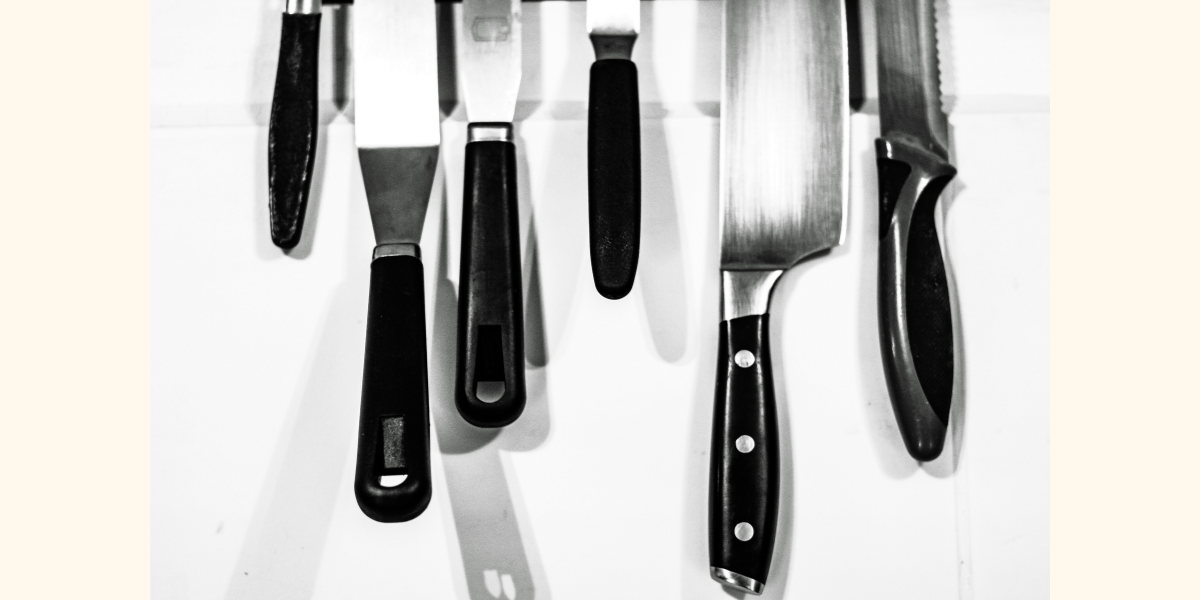
I placed my backpack on the chipped Formica and pulled out two black leather cases, each holding a ten-inch Yanagiba slicer, along with a rectangular wooden box containing a fluted eight-inch Japanese chef’s knife. I opened each holder, revealing red velvet lining and three gleaming blades.
Grandma’s eyes opened wide. “Shhaaaang, they’re so pretty!”
I lifted one of the slicers out of its case and presented her with the handle.
She turned the knife, looking down the bevel to check its straightness. “Where’d you get these?”
“I bought them a few years ago,” I told her. “They were handmade by this old Japanese man whose ancestors made samurai swords.”
Her eyes widened. “You were in Japan?”
“Yeah, I’m a chef.” I could hear the pride in my voice. “I’ve cooked all over the world—London, Germany, Brazil. I was in Japan a couple years ago.”
My mind drifted to the old knife-maker’s tiny shop, with its smell of incense and steel. I’d spent that afternoon skateboarding around Osaka before heading back to the Imperial Hotel, where, a few days later, I had cooked a banquet showcasing Native foods. I loved everything about the city—the late-night eats, the towering temples, the chefs who worked alongside me with quiet reverence and respect.
“Kay-yeah, what are you doing out here drinking and partying too much?” The old woman’s stern voice pulled me back to the present moment. “Why are you selling these? They’re special.”
Before I could answer her, she got up and tugged open a drawer.
“Look at my knives.” She held up a couple of worn Old Hickory knives that looked like they were a few decades old.
“This one’s my favorite,” she said, pulling out an eight-inch Chicago Cutlery fillet knife. “It cuts potatoes and meat gooood!”
I checked it out, running my thumb along the side.
She grinned again. “See. I keep it sharp.”
Part of me wanted to sit with Grandma all morning, bonding over our shared appreciation for a well-honed blasé. I’d tell her about learning to cook with my White Mountain Apache mother and my Navajo grandma, and about my experiences working in high-end kitchens and meeting other Indigenous chefs like me in Seattle and São Paulo. I was certain she would understand when I told her how, ever since my father had died the previous spring, my knives just didn’t seem that important anymore. I had relapsed, losing my first executive chef job. I’d been bumming around the Rez for months. Nowadays, I’d explain, fine dining was the last thing on my mind; I was lucky if I could scrape together a dollar or two to buy a bag of chips or a greasy burger.
Instead of saying any of this, I took a sip of the coffee she had poured me. I needed to get high again.
“I’m selling these long slicers for eighty dollars and this chef’s knife for sixty dollars,” I said. Each of them had cost me a few hundred.
Grandma gasped “Kay-yeah, I don’t have that much money!”
She carefully lifted the chef’s knife up from its box. “I like this one ’cuz it’s pretty and you said potatoes won’t stick to it.” She took a deep breath and looked me dead in the eyes. “Hol’ on. Wait here.”
I stood still, trying to stop my hands from shaking. A rack of freshly washed breakfast dishes sat next to the scrubbed-down sink, and a row of Apache dolls lined the windowsill.
Grandma returned clutching a small beaded purse. “All I have is forty-five dollars,” she said, plucking out a few folded bills.
My heart sank, but I needed the money. I consoled myself that, judging by how she treated her favorite fillet knife, my fluted Japanese blade would be going to a good home.
“All right, go for it then,” I said, putting the knife back in the box and grabbing the cash. I jumped up to leave, almost forgetting my backpack. The woman handed it to me and accompanied me to the door.
“Don’t open any El Pato cans with that knife,” I joked over my shoulder.
Grandma was still watching me when I turned back on to the road to make the short trek over to the bootlegger’s house, where I knew I could buy a twelve-pack of beer and a liter of Barton vodka, AKA rot gut, for cheap. After that, I’d stop by my dealer’s place and talk him into taking both of my Yanagiba slicers in exchange for an ounce of weed and an eight-ball of coke.
In the span of a year, all that had fallen apart. Since the previous summer, I’d been teetering on the edge, drunk and high most of the time. I was lost.
By ten a.m. that morning, I was down to my last knife: the gorgeous, mahogany-handled santoku with the words APACHE CHEF carved into the blade. No matter how bad things got, it was the one thing in my life I wasn’t willing to sell.
When I found myself walking the familiar streets of Whiteriver, Arizona, in the winter of 2011, looking to pawn off my knife collection to anyone who could pay me in cash, I was not in a healthy state of mind. Deep in my addiction, I was confused, angry, heartbroken, and disillusioned. I had forgotten what had carried me through other difficult moments in my life—my passion for cooking and, more specifically, the strength I derived from learning about foods that were indigenous to the Americas.
In the years leading up to that bleak morning, I had done everything that a young, ambitious cook should do, working in high-end restaurants down in Phoenix, traveling across the country and around the world doing cooking demos and tasting dinners, making industry connections.
In the span of a year, all that had fallen apart. Since the previous summer, I’d been teetering on the edge, drunk and high most of the time. I was lost.
Back then, I couldn’t have known how my training as a chef would ultimately save my life, giving me the tools to stabilize, dream big, and live in sobriety for fifteen years and counting. I was incapable of imagining that one day I’d be back in my hometown—not just alive but thriving—running a beautiful café specializing in Native food. There’s no way I would have believed that I’d be working as an addiction recovery specialist in my community.
All I knew was that, even at my lowest, I was desperate to hold onto my most prized chef’s knife. It was the one thing that kept me tethered to reality.
Even as my life and my recovery took many wild swerves, transporting me from the Rez to one of the fanciest restaurants in the country, all around the globe and back again, cooking was a constant. But it was cooking with Native Foods that truly showed me a new way to live. Working with the Indigenous cultivars that have long nourished our people—seasoning with acorns, popping amaranth, or brewing wild tea—ultimately helped me find my way back from the brink.
I didn’t learn any of this in culinary school. During my formal education as a chef, the subject of Native foods never came up. The message I received from teachers and mentors, again and again, was loud and clear: When it came to cooking, all things French reigned supreme.
Instinctively, I knew there was more to the story. When I was growing up, my parents instilled in me a profound love for family, home, and culture. I knew that when it came to Native communities and ceremony, food was a very big deal. It was at the center of many of my most vivid memories—and of every gathering, joyous and sad.
Once I started working in the professional food world, when I was just eighteen years old, I decided to educate myself as much as possible about Native food traditions, making a name for myself with this specialized knowledge. But I had no idea how far this journey would take me—or all the ways it would alter the trajectory of my life.
There is nothing simple about the story of indigenous food in the Americas, which is both violent and terrible but also ordinary, beautiful, and poetic.
From the moment they first made landfall, European colonizers used food as a weapon of mass destruction, burning fields of quinoa and forcing Indigenous farmers to slave on cocoa plantations. In an effort to starve the Native Americans of the Great Plains, white settlers massacred many millions of North American buffalo between 1870 and 1890, piling the animals’ skulls into monstrous mounds reaching up to the sky. All across the United States, federal soldiers rounded up our Native American ancestors like cattle, pushing them into prison camps, many of which later became reservations.
Fenced in and barred from foraging, fishing, hunting, and farming, Indigenous peoples were intentionally cut off from the calorie-rich landscapes that had fed them for millennia. Native communities—who had been eating fresh, seasonal foods long before farmers’ markets were a thing—were now forced to stand in line for military rations, subsisting on commodity foods like white flour, sugar, and blocks of orange cheese.
The Native foods have changed me, too.
The aftershocks of all this colonial violence continue to reverberate. Poor nutrition and poverty have resulted in shockingly high rates of diabetes, heart disease, and other illnesses among Native Americans. Ongoing injustice rears its ugly head everywhere: poor mental health, suicide, and addiction.
Still, our food traditions endure. Growing up, I participated in Apache ceremonies where we feasted on traditional dishes like Dijįįzhi, Acorn Stew, and racket bread cooked on juniper and oak coals. I was also taught that many of the things we ate regularly at home, like corn, squash, and beans, were “Native foods,” but I was too busy being a rowdy kid to give it much thought.
I wasn’t alone. The fact that most non-Natives, and many Natives as well, would be hard-pressed to put together a list of Native American foods—that’s colonization in action. It wasn’t until I was in my twenties, deep into my self-directed learning, that I began to grasp the profound connections between Indigenous foodways and our way of making sense of the world.
It was only when I started cooking in high-end restaurants, back in 1998, that I realized how many of the foods we routinely consume—often with little thought to where they came from or what memories they carry—are Indigenous cultivars, crops that were planted and used as food and medicine by Indigenous peoples as far back as 8000 BC. The erasure of our ancestor’s contribution to food history doesn’t change the fact that Indigenous cultivars have shaped the world in significant, lasting ways.
The Native foods have changed me, too.
When I first became a line cook, I worshiped at the altar of fine dining, aspiring to work my way up the ladder and create dishes that were technical and intricate. But taking a deep dive into the stories of tomatoes and chocolate and corn shifted my focus to the human aspects of cooking. These foods laid the foundation for my recovery, teaching me about the tangible, tactile ways that cooking can be a way to participate in healing and revitalization.
For me, success no longer looks like working at a Michelin-starred restaurant. It looks like Café Gozhóó, the small restaurant I run on the White Mountain Apache Rez. It looks like the clean, open kitchen I designed to facilitate collaboration and communication between my all-Native staff. Success is a giant Apache squash grown by Apache farmers at Ndée Bikíyaa, the People’s Farm, a beautiful operation down the road in Whiteriver. It’s lining our shelves with jars of different dried beans and chilies, and hanging corn and wild tea from the ceiling to dry.
All of us, Native or not, are in recovery from the disease of colonialism, a system built on a set of beliefs that erode our humanity and harm the earth. Our intimate relationship with the foods we eat has been lost, but we can start to heal by reclaiming it.
Getting curious about ingredients we use every day provides a sort of spiritual nutrition, offering a tangible vision of a more gentle, more vibrant future. Food has the ability to connect us to each other. It can point us back home.
We can all learn from the cultivars that have been part of this landscape for centuries. We have so much to gain from listening to their stories—and from telling our own.
__________________________________
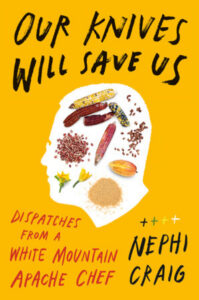
An excerpt from Our Knives Will Save Us: Dispatches from a White Mountain Apache Chef, published by Penguin Press, an imprint of Penguin Random House LLC. Copyright © 2026 by Nephi Craig.
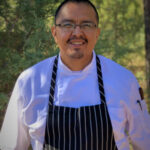
Nephi Craig
Nephi Craig is the executive chef of Café Gozhóó in Whiteriver, Arizona, on the White Mountain Apache Tribe, and an advanced certified relapse prevention specialist (ACRPS) and behavioral health technician (BHT) currently serving as the Nutritional Recovery program coordinator at the Rainbow Treatment Center. Craig is the founder of the Native American Culinary Association (NACA), an organization that is dedicated to the research, refinement, and development of Native American cuisine. His work has been recognized in national and international publications such as Newsweek, Forbes, Food & Wine, and The Guardian.