







Are Boy Bands the Cure for the Male Loneliness Epidemic?
G’Ra Asim on How His Black-Fronted Boy Band Helped Heal a Broken Heart
One of the most formative moments in my adventures in rock ‘n roll occurred when I was around fourteen. I went to a brick and mortar record store at the mall and read the liner notes to Good Charlotte’s self-titled 1999 full-length debut. The band is famously helmed by twin brothers, vocalist Joel Madden and guitarist/backing vocalist Benji Madden. Each member of their band had a section of the “thank yous” listed in the back of the CD booklet. Benji specifically thanked “the egg for splitting, so I didn’t have to become the lead singer.”
I had been fascinated with twins even prior to that, but Benji’s gratitude for a chance in utero event kicked my curiosity about twins into overdrive. I fantasized about moving through the world with a duplicate. Of course this egg’s split had been a winning lotto ticket from Benji’s perspective: he won a live-in songwriting partner, a genetically engineered vocal complement, and a co-conspirator in the lunatic dream of becoming a global alternative music icon. At that age, I was beginning to think about how to start and maintain a rock band, and I’d recently begun my earliest forays into puppy love. The two forms of relationship building commingled in my mind. I’ve probably never separated them as neatly as the Madden brothers’ egg in the time since.
Later, I would encounter the rock musical Hedwig and the Angry Inch. It features the song “The Origin of Love,” which posits that when human beings threatened the gods, the gods weakened the mortals by breaking them into two parts. That rift became our motivation to find love. Where the Madden’s bisection was fortuitous, the gods’ strike against humans set us off on an interminable search for restoration to a former wholeness. Both of these takes on the sundered self resonate in my experience of the heart space and the art space alike.
The two forms of rupture and reunion informed the year and a half I spent working on 99 Problems Finding the 1, a literary nonfiction book driven by an inquiry into how to be more lovable and loving. One of my main findings is that like politics, social behavior has an Overton window—a range of ideas that are seen as acceptable and normal. The fear of being cringe, corny or overly sentimental shapes our social Overton window, and we live in a more emotionally sterile culture as a result. A disproportionate concern with age appropriateness has a similar effect. Instead of choosing our activities and calibrating our relationships based on what will fulfill us, we try to meet the cultural expectations of our age group.
These behaviors may earn us a fleeting form of approval from our peers, but they deplete us in the long term. What would it look like to take a crack at nudging that social Overton window toward a range of so-called normal behaviors and attitudes that are more conducive to love? It would probably mean embracing the risk of coming across as saccharine or sappy. We’d all have to get more comfortable leaning into sincerity without self-consciousness. It might mean ditching any anxiety about coming across cringe. It could involve choosing hobbies and pursuits based on what we find meaningful, rather than whether they correspond with a particular decade of life.
Boy bands are derided for being too accessible, as if something that’s palatable and fun necessarily lacks substance.
Writing the book also led me to recognize that the loneliness epidemic has some primal roots. Lovelessness is aided and abetted by a culture-wide imbalance between resilience and sensitivity. We overvalue resilience because Earth is such a sketchy neighborhood. As I chronicle in the book, somewhere between 90 and 99 percent of all species that have ever existed became extinct. So it’s only natural people, and Americans in particular, are so preoccupied with strength, toughness and the ability to overcome. Those traits have their place and humanity wouldn’t be at the top of a terrifyingly competitive food chain without them.
But it’s also the case that human beings have incredibly delicate subjectivities, and we need folks who are attentive to, patient with, and wise about that. Which means we have to champion the characteristics that make that possible–like gentleness, compassion, and patience– or else. Many of society’s loneliest and most attention-starved members become its most desperate and violent.
Low regard for sensitivity is all the more costly in an epoch of political polarization, deteriorating social bonds, and rampant screen addiction. Loneliness looms as a threat to all genders, but men, who are lauded for gruff stoicism and scorned for vulnerability, can be especially ill-equipped to navigate atomization. What’s more, the trendy postures of chic apathy and terminal cool hinder genuine connection for everyone. When something as harmless as double texting is seen as a cringey faux pas, salvation takes a backseat to saving face.
I wanted my push back to go beyond the page, so I took Sartre’s warning that “literature is a bourgeois substitute for real commitment in the world” as a point of departure and a personal challenge. How could I go from passive reflection about becoming more lovable and more loving to advancing that cause through direct action?
Whenever my capacity to take a romantic view of life and its possibilities has flagged, rock music has lifted me up. As I completed early drafts of 99 Problems Finding the 1, I recalled that literary writers often prepare playlists to accompany their books. I thought I could take the trend one step forward by composing and recording an original playlist myself. A musical companion piece to the themes in a literary work intrigued me. When I thought about where to start, I put a basic Aristotelian principle into practice. You are what you repeatedly do, right? So if I want to be more lovable and loving, I should probably start a boy band.
As I began recruiting members, I realized it was more than getting by with a little help from my friends. Assembling a boy band is a way of splitting the egg myself, and repairing an injury meted out by wrathful gods in one fell swoop. Forming and being in the group is a tuneful antidote to the so-called male loneliness epidemic on two levels: it’s a source of camaraderie and an emotional outlet. We sing back up for each other and back each other up through life’s travails.
The project that resulted is called Uppity. We’re an art rock boy band, which sounds paradoxical. Boy bands are derided for being too accessible, as if something that’s palatable and fun necessarily lacks substance. Art rock is music that promises fodder for contemplation as opposed to being “only” something to dance to. Uppity is an extension of a book, a symbol and vessel of the main themes in 99 Problems Finding the 1, which makes it fodder for contemplation but also, pointedly, palatable and fun. Our debut EP is called Code Ditching, a phrase that describes gleefully abandoning the posture of terminal cool. It’s about not letting an arbitrary standard of behavior prevent you from living with the verve and intrepidity you may need to get free. To usher in the world that could be, you have to risk some positive maladjustment with the world that is. You have to ditch some of the prevailing codes of expression to model new ones.
Books and boy bands are a bard’s best balm.
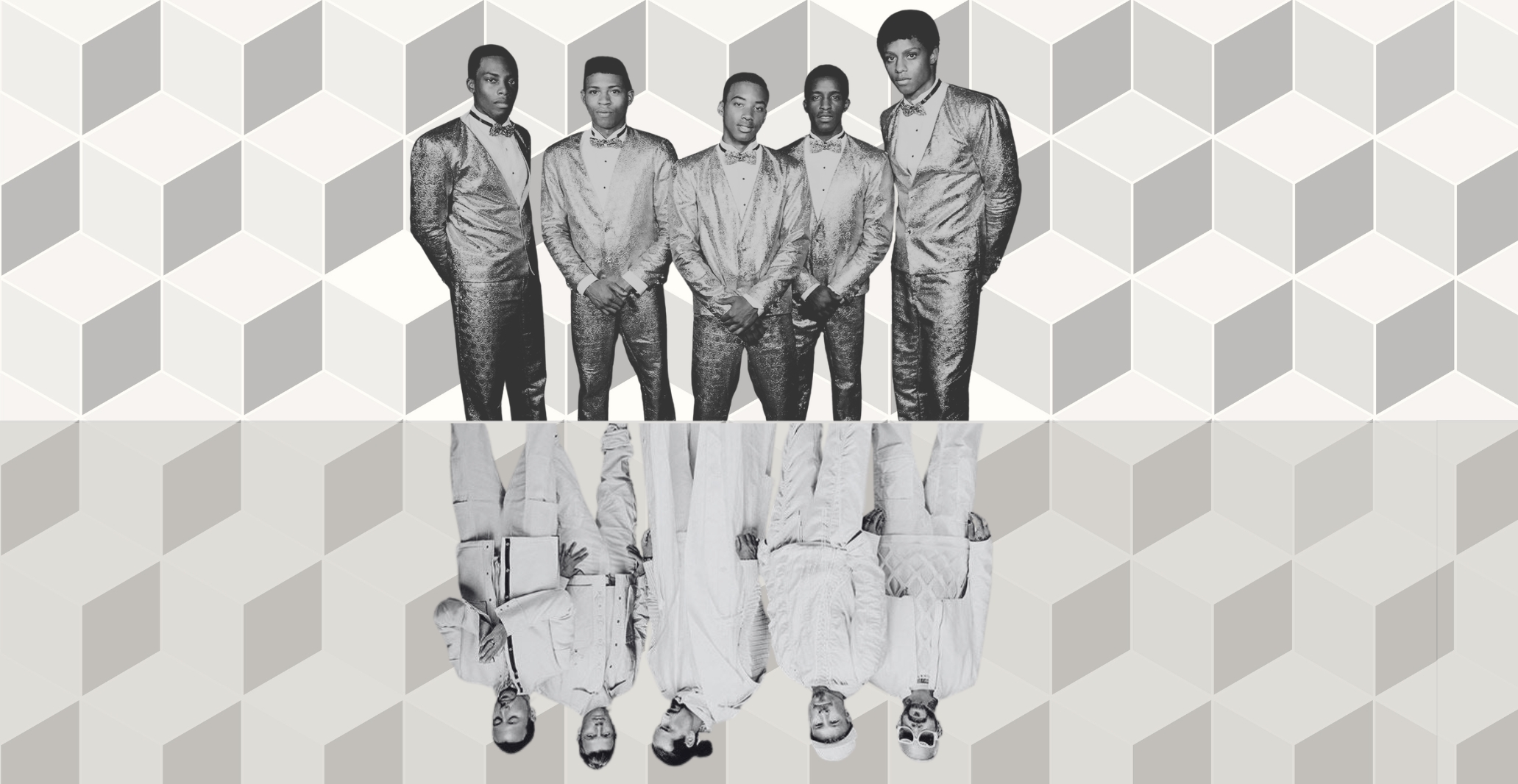
Race affects how pop groups are marketed, and this in turn shapes what kinds of expression are seen as racially appropriate. The Backstreet Boys are in many ways a squeaky clean offshoot of New Edition, for instance, but the former is generally seen as a boy band while the latter is branded as a male R&B group—something sexier, less innocent. For a black artist like myself, forming and writing songs for a boy band is a form of code ditching, a way of seizing aesthetics and timbres that have been unduly withheld from my predecessors. This, too, has a reparative effect.
Admittedly, calling us a boy band is a little tongue-in-cheek. We’re all in our thirties and not in denial. Our lineup isn’t even all-dude. We just stand for the notion that adulthood doesn’t have to mean adulterating your brio for being. In my mind’s eye, I’ve created a supercut of Uppity’s percussionist, Opus, sitting on the drum throne, clicking one stick on the hi-hat cymbal and spinning the other stick in between his fingers, as if he’s waiting to drop the beat but hasn’t received his cue to do so yet. It’s the musical equivalent of the feeling you get on the night before your day off of work. The supercut is composed of clips in which a given song or instrumental jam session is approaching the part where the drums are in full effect, but there’s still a measure to go before his star turn.
I mentally replay this sequence because it’s a visual metaphor for living in the eternal present but also eagerly anticipating what is imminent, like something savory and satisfying is just around the corner but never quite already past. It’s fitting for Opus to be the person who embodies that symbol and according philosophy. He wouldn’t ever say “gee willikers!” but almost. He’s one of the most wholesome people I’ve met. Years ago, when we first started hanging out, I once suggested that he get into songwriting, since his sister, his girlfriend at the time, and his new best buddy and collaborator (ie: myself) were all songwriters. Opus declined.
“What would I write about?” Opus wondered. “There’s no conflict in my life.”
Uppity takes inspiration from Bikini Kill, the feminist rock band who spearheaded the riot grrrl movement, a network of punk rockers challenging misogyny through music, zines and workshops in the 1990s Pacific north-west scene. Where Bikini Kill’s raw, aggressive, discordant tunes subvert gender expectations imposed on women, Uppity’s sincere and introspective jams refute the self-defeating emotional sterility that patriarchy demands from men. One of Bikini Kill’s many iconic credoes is the titular refrain in their 1992 track “Resist Psychic Death.”
It’s a call to retain ways of knowing, feeling, and relating that the dominant culture discredits. Psychic death is akin to “spirit murder,” a term coined by Patricia Williams to describe forms of racial violence that wound one’s humanity and dignity. Forming a temporally displaced, black-fronted boy band has been a spirit healing and nurturing endeavor. The three other members of Uppity are bubbly, guileless, and joyful to an extent that’s unique at any age, but especially rare in adulthood. Hanging and collaborating with them protects and reinforces these qualities in myself. Becoming more loving and lovable is easy when you cultivate your softer side by singing it loud.
In lieu of having a twin or retaliating against the gods, they say that time is the trustiest remedy for a broken heart. I’ve been fortunate to find a two-prong treatment that gives time a run for its money. Books and boy bands are a bard’s best balm.
__________________________________
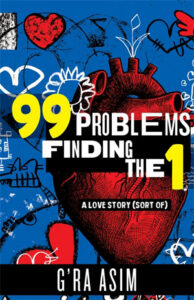
99 Problems Finding the 1 by G’Ra Asim is available from Beacon Press.

G'ra Asim
G’Ra Asim, a writer and musician, is the author of Boyz n the Void: a mixtape to my brother (Beacon Press). He has served as a writing director at the African American Policy Forum and a graduate teaching fellow in Columbia University’s Undergraduate Writing Program. His work has appeared in Slate, Salon, Guernica, The Baffler, and The New Republic. When not writing or teaching, he sings, plays bass and writes lyrics for DIY pop punk quintet babygotbacktalk, who were named one of Alternative Press’s “17 rising Black alternative bands who are leading the next generation.”