Antiuniverses, Deepfakes, and Clone Children: September’s Best Sci-Fi and Fantasy Books
New Reads from Scott Hawkins, Micaiah Johnson, Premee Mohamed, and More
September is my birthday month, so this latest crop of sci-fi, fantasy, and speculative books feel especially like presents for me, but also for you! Fantasy heists, magical spy thrillers, dystopian abortionists, parallel-universe marriage stories, deepfake Dorian Grays, houses dying to be haunted—what more could you want? Let’s not forget the extra goodies from our 2026 SFF preview, Freya Marske’s Bodies of Magic and Emily St. John Mandel’s Exit Party!
*

Scott Hawkins, Blacktail
(Crown, September 1)
The first book in over a decade from the author of beloved modern horror cult classic The Library at Mount Char is a cause for celebration, and it also sounds weird as all get-out. The animals of the forest follow an ancient, intensely territorial hierarchy of hunters and prey: wolves versus hunting cats, half-breeds alternately accepted or spurned by their respective herds or packs. But then the humans hunt them while destroying the forest, and all those generations-long grudges go out the window as the half-wolf Blacktail rises up as the Forest God’s dark champion. On a killing spree that starts with revenge on humans but eventually approaches the apocalyptic, Blacktail encounters all manner of animal allies who want to see him bring about the end of the two-leggers’ world.
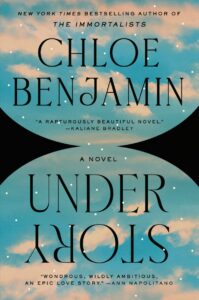
Chloe Benjamin, Under Story
(Putnam, September 1)
Laurel Salter, a thirtysomething scientist studying mycelium, flees her work and her broken marriage for the remote anonymity of Antarctica’s McMurdo Station. But outside the station is the Arc, an otherworldly light that draws droves of physicists—like her ex-husband, Eli—to study its effects. What he discovers confirms his theory of the antiuniverse, a parallel world where time moves backwards. But it’s Laurel who is most drawn to the antiuniverse, and the potential of healing the tragic loss that ruptured their partnership. This sounds like a speculative riff on The Last Five Years; I’m already anticipating the ugly-crying catharsis.
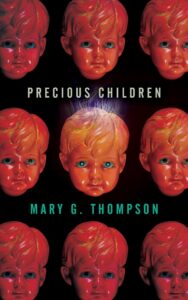
Mary G. Thompson, Precious Children
(Tachyon Publications, September 1)
This dark speculative novel could be a Black Mirror episode with its unflinching look at parents who would “do anything” to get their child back, but equally dire depiction of the privilege and entitlement that festers in such a scenario. In a future where children’s lifespans are grimly shortened, fertility clinic Generations, Inc. has a solution: wealthy families can clone their kids and circumvent death by uploading their child’s consciousness into a new host. No matter that those doubles have their own consciousnesses, not to mention foster families who have lovingly raised them. When the Blakes want the third iteration of their teenage son Geoff, young Nathan Donovan must surrender his mind for another’s—but the transfer fails, leaving both consciousnesses fighting for their survival. Meanwhile, Geoff’s sister Di comes to suspect that Geoff 2.0 was a con artist. It’s shades of old stories about missing children found who are impostors, crossed with the modern ethics of embryo donation and other fertility gray areas.

Premee Mohamed, Wickhills
(Tor Books, September 8)
A fantastical spy thriller set on the streets and underground passages of a magical city? Hell yes. The city of Wickhills is protected by Seaborne, an intelligence agency that hires street-smart types like Vycol Ferec on top-secret missions. But when his latest asset pickup is a scientist defecting from another city—a scientist who might be hiding an apocalyptic weapon—it burns him from Seaborne. On the run within the city that he ostensibly knows better than anyone, but that he also realizes he knows nothing about, Ferec must rearrange his entire worldview about what is right and who the “good guys” are. This also sounds like one of those novels where the setting will stick with you for a long time, from the organic quirks of Wickhill’s literal foundations to some of its centuries-old inhabitants who may hold the secrets to the city-state’s true nature.
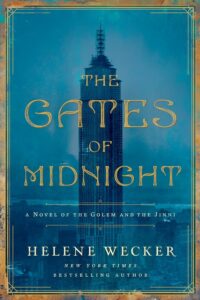
Helene Wecker, The Gates of Midnight
(Harper, September 15)
Helene Wecker’s historical fantasy trilogy (that began with The Golem and the Jinni) concludes in 1930 New York City: three decades since Ahmad the jinni buried the flask containing the captured wizard Yehudah Schaalman in the Syrian desert. But when Schaalman tricks a stranger into digging up the flask, he returns to the Big Apple, intent on revenge against the golem Chava, who just wants to tend to her Brooklyn garden sanctuary in peace. Also converging upon the city are Ahmed, who has lost his job in the 1929 stock market crash, and a riveter on the under-construction Empire State Building with secret connections to all of them.
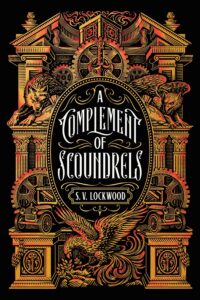
S.V. Lockwood, A Complement of Scoundrels
(Bindery Books, September 22)
I adore a heist, and I’m so excited to see more female-centric fantasy heists this year, between C.L. Polk’s The Feywild Job and now S.V. Lockwood’s debut. Double-crossed thief Myria sounds like a real Debbie Ocean (complimentary), in that she’s had enough time stewing in Carintheum’s jail to plot revenge on her master who put her there after cracking the Elysius Vault. Reuniting the old crew? On it. Trick the king of tricksters to get his help? She’s working that problem. Decide whether to trust a new ally when feelings are involved? This sounds like it’s going to get messy, in the best way.

Alma Katsu, Incarnate
(G.P. Putnam’s Sons, September 22)
A modern take on The Picture of Dorian Gray by way of social media algorithms, Alma Katsu’s latest feels very in conversation with Yesteryear: Failed influencer Dorothy Wagner decides to reinvent herself as the Dr. Frankenstein for Isabella, a stunningly realistic deepfake who quickly amasses millions of followers. But what will it mean if so many people are willing to believe that Isabella is real—will it imbue the creation with enough conviction to become dangerous to her creator? Like Frankenstein, will Isabella make the case for her own existence separate from her origins?

Inez Ray, Buzzard
(Bindery Books, September 22)
In 2086, corporations monitor fertility and have outlawed abortion. Midwife Mae Bastet, serving a sentence for infanticide, has spent seven years away from her children in Buzzard, the private prison run by paramilitary corporation Obsityan. Her job is ostensibly to monitor the health of teenage drone pilots, but when one of those teens becomes pregnant, it presents Mae with an awfully personal dilemma: do her duty as a midwife and risk never seeing her children again, or remain complicit with Obsityan’s crimes?

Micaiah Johnson, The Unhaunting
(Putnam, September 29)
From the author of The Space Between Worlds comes a horror debut that opens with a compelling premise for our times: Three lifelong best friends attempt to build a home together when one of them inherits a Civil War-era manor. Shantell is understandably skeptical of the supposedly dreamy Abernathy House that has been bequeathed to her friend Avery and his contractor brother Tobias, but those anxieties melt away when they step inside. Like, something otherworldly literally melts away the anxiety. Now, is the fact that the house itself is eerily turning them into better versions of themselves worth worrying about? Probably. Ditto the presence of ghosts from Abernathy’s construction 170 years ago, when a daughter of the Confederacy wished for a home where nothing bad would happen. Something tells me the house is tired of all that calm and wants to become something else…

Natalie Zutter
Natalie Zutter is a New York-based writer and pop culture critic whose work has appeared on Reactor, Lit Hub, NPR Books, and elsewhere. Her SFF short fiction has been published at PodCastle, Adventitious, and The Icarus Writing Collective. Find her on Bluesky @zutsuit.