Angela Flournoy on Exploring Economic and Social Uncertainty in the Internet Age
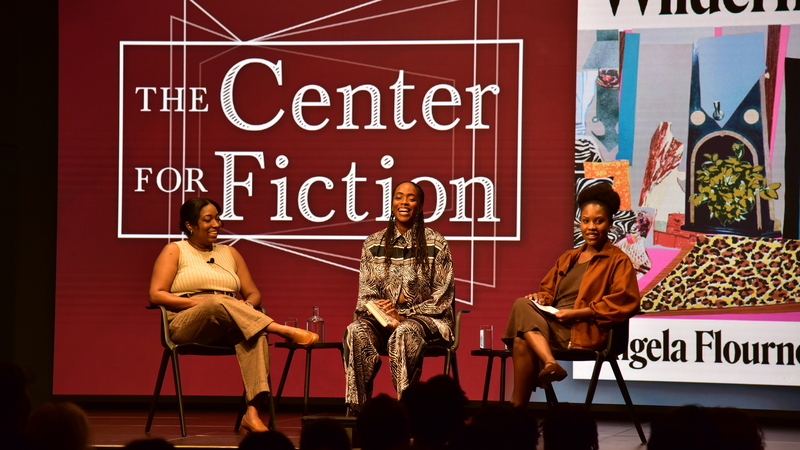
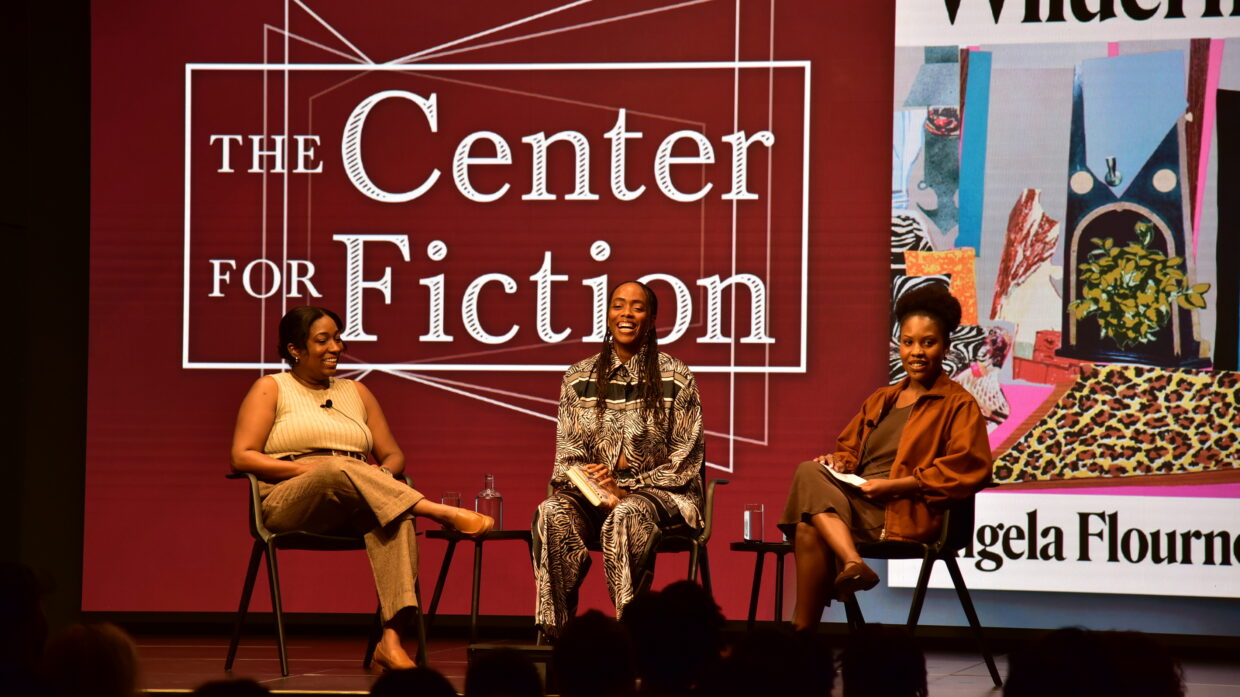
The Author of The Wilderness in Conversation With Brit Bennett and Raven Leilani at The Center For Fiction
Angela Flournoy, critically acclaimed author of The Turner House, joined The Center For Fiction to celebrate the highly anticipated release of her new novel, The Wilderness.
The Wilderness follows five Black women in their twenties—Desiree, Danielle, January, Monique, and Nakia—as they wrestle with profound questions reverberating through their lives: How do we reconcile the search for purpose and direction with the shifting stakes of maturity? How should friendship be prioritized in the face of these transformations? Set against the backdrops of New York and Los Angeles from the late 2000s through the 2020s, the novel navigates the uncertain metamorphosis of contemporary adulthood.
Flournoy was joined in conversation by Brit Bennett, author of the New York Times bestselling novel The Vanishing Half, and Raven Leilani, author of The Center for Fiction First Novel Prize-winning book Luster. Don’t miss this intimate exploration of modern connection and coming of age.
From the conversation:
Angela Flournoy: Money is real. And I think that a lot of people talk about how fiction and novels historically are supposed to be for the middle class. And I’m not supposed to do this and they’re not supposed to do that. That might be historically, like a century ago, who the target audience was for these books, but I read the same books and I did not come from that.
Plenty of us are broke. But we also think about a lot of other things. We just don’t want to pick up the check at the end of the meal.
And it never occurred to me that in my fiction, I was supposed to not talk about money or conversely, make money—not having money—the sole characteristic of a person, because there’s that. Like that’s always been in fiction—it’s like a person can be broke, but that’s got to be the only thing they ever think about.
They can’t ever have any other concerns because they gotta find money. And I feel like that’s not—plenty of us are broke. But we also think about a lot of other things. We just don’t want to pick up the check at the end of the meal. So I wanted to make that something that felt present.
But also one of the things when I was thinking about how my friendships are going to evolve, I also was thinking about individually, this generation of people for whom the future—the future that our parents in their 30s and 40s had—is not guaranteed at all. Right. How is that person just living with precarity of a different kind?
What does that do to your brain? And what also does it do to your interactions with other people? And so there are friends who are hustling, pivoting to influencing in an effort to get money, to try to figure out how to capitalize on this moment. And then you have people who grew up with money but feel because of that, that they need to have this bigger purpose for themselves, to give back or to have it all mean something.
And then you have a character who inherited money because of a series of tragedies, who just doesn’t like to think about it. And then you have somebody who has a good man with money, but it’s not enough. I thought that that was a good sort of diversity of relationships with money, and some of it changes throughout the book.
Brit Bennett: Right. I know we have to jump to Q&A, but let me just ask you one final question. So please think about your questions. I want to ask you about writing about the internet. And I’m asking about this selfishly, because we sort of met on the internet. We met on Twitter, so we were like Twitter mutuals.
And then when you came, you were on your book tour for Turner House, and it was the first time we met in person. So you are the one of the best things that ever came from me being on Twitter. I’m no longer there, but I’m so grateful that I met you. I’m curious if you just talk about writing about the internet. Again, thinking about the evolution of social media, during the duration when you were writing this book, I imagine that changed.
And yeah, you have this character in the book who sort of aspires to internet fame. So could you talk about that a little bit, the experience of writing about the internet?
AF: So, there’s a character named Monique who has had this one moment that she got a little bit of virality off of. She was a trained librarian, but she decides, well, maybe I can get some more or something and maybe I can make some money doing this.
The thing about writing about the internet is that it is extremely cringe. So the hardest parts to write in this novel were every single small—she has the smallest section—every single one of those Monique sections were very difficult, because the thing that I wanted to explore is the way that, if you are in the business of publicly self narrativizing all the time, you can actually not know yourself that well.
And so I tried to explore that. And I also wanted to show what it’s like when you’ve been doing it a long time. So she’s got like a blog spot kind of thing in the beginning, and then it’s mostly just posting. But then by the end she’s got a podcast. She’s pivoted through the various mediums within social media and just writing on the internet.
But I wanted to show the way that—have any of you ever met a very online person, and then at least the first hang, you’re like, ugh she’s one of those online people. Like she’s weird in person, right? Sometimes I’ve learned that in subsequent hangs, they’ll be less weird, but sometimes they won’t.
The thing that I wanted to explore is the way that, if you are in the business of publicly self narrativizing all the time, you can actually not know yourself that well.
But it’s interesting because, when we were on Facebook a million years ago and they were called updates, sometimes you were just like, “I just got coffee,” right? You didn’t know what you were supposed to be putting. But now everyone is self-publishing. Everyone is self narrativizing.
I was talking to someone the other day, a dad at a playdate, and he was like, yeah I have friends of mine who don’t even have to have a lot of followers, and they’ll say things like, ”if you don’t like my content, then—” like, do you have content? Or are you just keeping in contact with your friends?
But the lines have gotten blurred. And it feels like a lot of people who maybe just have like 500 followers. Should they get a moment like Monique did where they get virality, they would be leaning into it because one all right, frankly, it’s a viable career path in 2025, but two, because it always seems like that is the end goal of, what else are you sharing all of this for?
And so I wanted to think about that, but I also wanted it to feel like as a reader you are allowed to cringe when you are reading Monique sections. You’re supposed to. I cringed when I was writing, but it was an exercise in one, again, I’m interested in, how are people living right now?
And we see over 20 years, how is she living on the internet? In the beginning, you can tell she doesn’t think anybody’s reading it just by the way of posture. But by the end, the posture is different. You know, she’s self-referring a lot. She’s perhaps trying to coin some term. She’s got like a Patreon, right?
Again, it’s a viable way to make a living in 2025. So I’m not criticizing anybody who has all of those things, but I wanted to think about, what does that mean to your “IRL” relationships? And she does have arguments about who’s “IRL” with the people who’d known her before that.
*
Angela Flournoy‘s bestselling new novel, The Wilderness, was released by Mariner Books in fall 2025. The novel was long-listed for the National Book Award and a finalist for the Kirkus Prize. Angela Flournoy is the author of The Turner House, which was a finalist for the National Book Award, a finalist for The Center for Fiction First Novel Prize, a Barnes & Noble Discover Great New Writers selection, an Indie Next Pick, and a New York Times Notable Book of the Year. Her fiction has appeared in the Paris Review, and she has written for the New York Times, the New Yorker, Los Angeles Times, and elsewhere. A graduate of the Iowa Writers’ Workshop, Flournoy has taught at the University of Iowa, Princeton University, and UCLA. She lives in New York.
Born and raised in Southern California, Brit Bennett earned her MFA in fiction at the University of Michigan. Her debut novel The Mothers was a New York Times bestseller, and her second novel The Vanishing Half was an instant #1 New York Times bestseller. Her essays have been featured in the New Yorker, the New York Times magazine, the Paris Review, and Jezebel.
Raven Leilani is the author of Luster. Leilani is a National Book Foundation 5 under 35 honoree, the recipient of the 2020 Kirkus Prize, VCU Cabell Prize, NBCC John Leonard Prize, Dylan Thomas Prize, Clark Fiction Prize, and The Center for Fiction First Novel Prize. Leilani’s work has been published in the New Yorker, N+1, Granta, the Yale Review, and the Cut, among other publications..
______________________________
The Center for Fiction is a literary nonprofit based in Downtown Brooklyn. Our mission is to support readers and writers of all ages and histories, and to build community through fiction. We offer a wide range of programming for local and national audiences, including Events, Reading Groups, and Writing Workshops. Our home in Brooklyn features a Bookstore, Café & Bar, Library, and Writers Studio. Members of The Center for Fiction enjoy invitations, discounts, access to our Library collection, and more. Join today.
The Center for Fiction
The Center for Fiction is a literary nonprofit based in Downtown Brooklyn. Our mission is to support readers and writers of all ages and histories, and to build community through fiction. We offer a wide range of programming for local and national audiences, including Events, Reading Groups, and Writing Workshops. Our home in Brooklyn features a Bookstore, Café & Bar, Library, and Writers Studio.