A Poem For Bad Dads: Annakeara Stinson on The Cremation of Sam McGee
“He haunts us, but sometimes, playfully, surprisingly—and in this way, even in death, like McGee, he returns.”
Robert Service’s The Cremation of Sam McGee is a lyrical poem lodged deeply in the folds of my brain—but, naively, unconsciously, I figured my brother was the only other living soul who could say the same. The poem seemed like something that belonged wholly to my late father, who would recite it to us often, with an overly enunciated and vaguely British brogue, as if doing Macbeth in the West End. He had a copy of the poem hanging on a laminated plaque by his desk in his damp basement office in our first childhood home. I have a memory of him picking me up from half-day kindergarten, likely buzzed, trying to teach it to me.
The Northern Lights have seen queer sights,
But the queerest they ever did see
Was that night on the marge of Lake Lebarge
I cremated Sam McGee
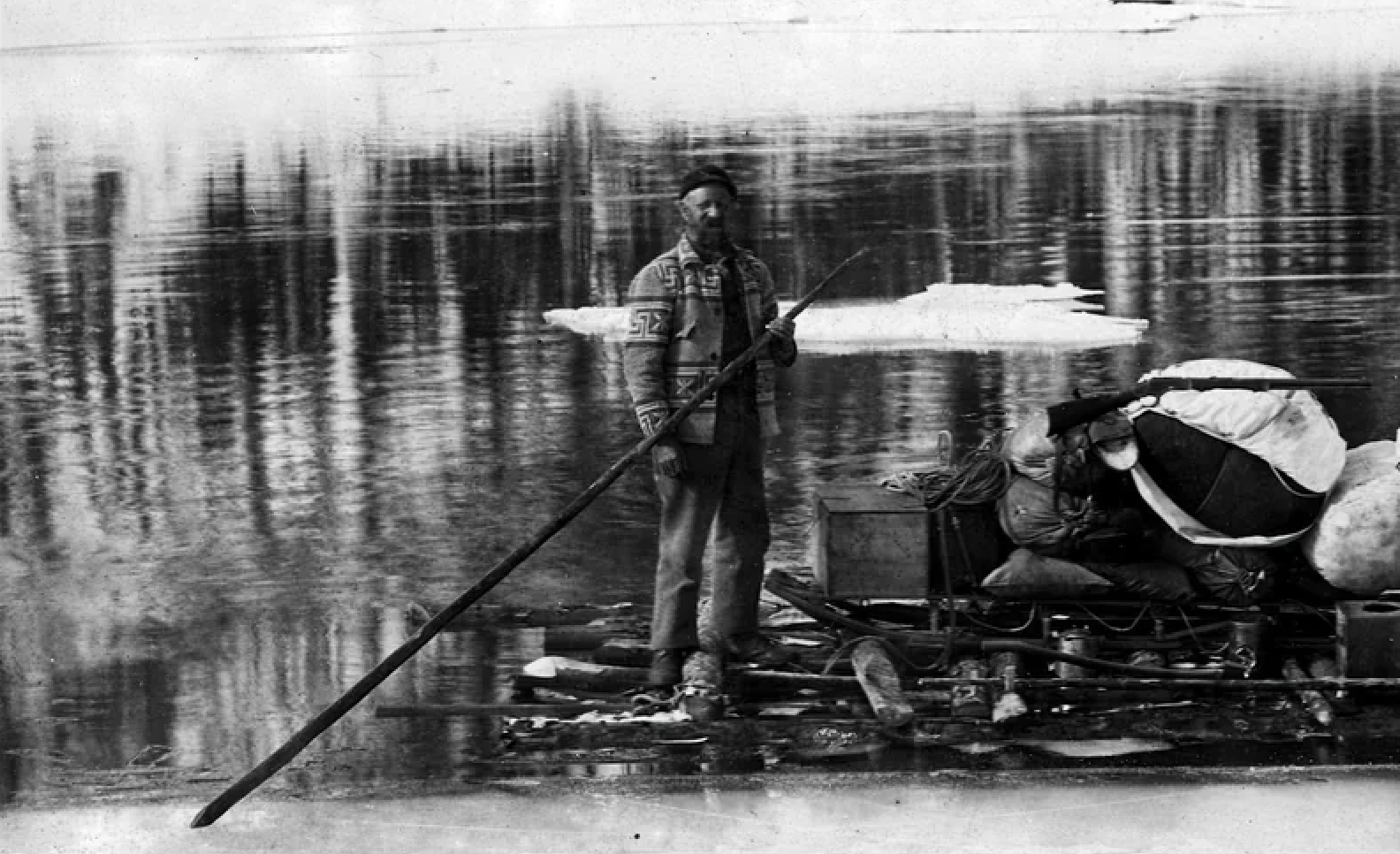
Even as a little kid I understood the full arc of the poem’s narrative through my father’s recitations: two men, the narrator and Sam McGee, are searching for gold in a harsh Yukon winter. Sam McGee, from Tennessee, hates, complains about, and eventually lays down to die of the cold that “stabs like a driven nail.” Sam McGee asks the narrator, when he feels death knocking, for a promise to cremate McGee’s remains. It wasn’t death that scared Sam McGee, which came for him shortly, it was the idea of his body eternally yearning for warmth in frigid ground. The narrator stays true to his word—as a promise made is a debt unpaid—hauling around McGee’s corpse until he finds an abandoned boat (…on the previously mentioned marge of Lake Lebarge) where he is able to cremate him in the boiler oven. The narrator goes on a walk in order to avoid hearing the “sizzle” of McGee’s body melting, but—in a supernatural twist—when he later checks on the body, McGee reanimates, insisting the narrator shut the oven door so as not to let in a chill.
It seemed like there was something my Dad was trying to express through his connection to the poem, and to teach his children, in a deceptively lighthearted way, about the brutal realities of life.
Vivid, brutal, cheeky, slightly magical, very performable is The Cremation of Sam McGee, like much of Robert Service’s writing. His rhymes are so delightfully whacky (a personal favorite being “my frozen chum” with “cre-ma-to-reum”) that some of Service’s contemporaries wrote his work off as doggerel. Not that he minded. He was a bank clerk from England who studied poetry—for a while at University of Glasgow, but mostly on his own—and was devoted to traveling through the American West and Canada. He met cowboys and real Yukon Gold expeditioners, and their stories inspired his most famous collection, Songs of a Sourdough. In it are the recurring themes of fraternal loyalty, longing, nature’s bounty, and the rough toke that is doggedly searching for a better life. It spoke to people at the time (seemingly men in particular) selling millions of copies. It also, apparently, spoke to their progeny.
As a sort of spiritual Easter egg for my dad, may he rest, I mention the poem in my novel, Nerve Damage—the father in the novel loves the poem as well. I didn’t think much of my mention of the poem until two people who read early copies of the book relayed that they knew the poem because their less-than-stellar fathers had loved it, too. One remembered her father reciting it, drunk, at the dinner table, like it “held all the truth of life.” The other told me she texted her brother after seeing the poem mentioned in my book, and he told her he had recently seen it in Katherine Dunne’s Geek Love, in which it is also performed by a dark father figure.
I am literally nonstop texting my sibs rn about Sam McGee, my friend texted, relaying that the sibs all know it by heart and could recite it immediately. She had once even considered a “strange things done in the midnight sun” tattoo but feels relieved she let the inspiration pass. Her “bad dad” learned it in college, by candlelight, from a creepy man who used to burn Parmesan cheese like incense. She sent me a recording of Johnny Cash reciting the poem and told me to look at the comments. There are mentions of McGee performances around campfires by scout leaders, uncles reciting at holidays, but I had to laugh in recognition that many memories shared go like this:
@catmonkey4351 8 years ago
My dad died in ’95 and mom divorced him in ’73. I’d only see him once a year, or maybe 2 or 3, but our favorite time was when he’d recite this rhyme from memory. His voice was deep and garbled, from years of smoking cigars but when he’d recite, we’d laugh with delight, and chills would fill the car…
@markraker3723 9 years ago
My Dad passed about 12 years ago. He was a Canadian (but born in the USA on paper). He told stories of the cold nights, and northern lights. I seldom shed tears of his passing, but this was his favorite poem. I love you Dad, I hope that you are warm and safe. Maybe we will meet in Hell someday.
@chantelprince9583 5 months ago
I fell in love with this poem when I was very young. My dad was a long haul truck driver and I would sometimes go on the road with him. I loved listening to the stories he would tell me about when he was young. One of his stories he told me was of the many camping trips he would go on with his grandfather. His grandfather would get drunk and would recite this poem. It is now on his grave stone…
*
“Why do the bad dads love it so much?” my friend jokes to me, and of course, I wonder the same. The answer seems as obvious as it is inscrutable, sort of like the poem. Feelings are not a fixture of the poem, perhaps that gives some hint as to its masculine appeal—the closest to emoting we get is McGee’s discontent. Of the two of them, it’s only McGee, the narrator explains, who whimpers and complains. He was always cold, but the land of gold seemed to hold him like a spell; Though he’d often say in his homely way that “he’d sooner live in hell.”
Re-reading it as an adult, the story is still simple and musical, the imagery harsh, the intensity eased by quirk—I wonder what’s being said without being said. Almost every line feels like a dare to consider a deeper meaning than the mad realities of the gold rush and upholding a dying man’s wish. Service, intentionally or not, leaves a wide, wild path for a person to project onto the journey, the setting, the suffering of discomforts, the upholding of promise, their close relationship. (Is it so crazy, for example, in a post Brokeback world, to read about two men “packed tight” in “robes beneath the snow” while stars dance above “heel to toe” and get queer love subtext?)
It seemed like there was something my Dad was trying to express through his connection to the poem, and to teach his children, in a deceptively lighthearted way, about the brutal realities of life. That sometimes death seems like the more welcoming option. The cremation, the burning, brought Sam McGee back to life, so…go into the fire? (Dad also introduced us to Catholicism, and, perhaps obviously, was mostly lapsed.) But in truth, one of the reasons his love for Sam McGee made such an impression on me is because it’s one of the few things I got to know he liked. He moved out when I was eight, and after that, we saw him only sporadically.
Other things I know of him. He was one of five boys. He went to Catholic school and grew up in a small city in Nebraska where his father owned an eponymously named family department store. He was an altar boy and worked summers in the store and on Colorado ranches as a teenager—but at core he was an artist who studied theater in college and worked frequently as a commercial actor until his life was eclipsed by alcoholism. He had style, he wore Levis 501s, leather shoes, trench coats, plaid button-ups tucked in. He played the banjo, chain smoked, sometimes cigarettes, sometimes a pipe. He loved Stephen King books. He built our huge wooden back deck by hand. He was a good cook and loved cowboy coffee, just grounds and a crushed egg with the shell boiled over an open flame. He struggled with what I retroactively consider a mood disorder. He was often angry or depressed, incredibly self-destructive, got violent. As a kid I could tell when the evening was about to go south: a red hot red neck, mumbling, jaw grinding, the look in his eye.
Creativity was one thing my dad gave freely, so the very act of passing along our interests makes me think of him, makes him present in his absence.
The last time I saw him was at a Stinson family reunion in Norfolk, Nebraska, where he was living in the house he grew up in. He was, according to his wife, very nervous and excited to see us. The thought makes my heart hurt, also makes me mad. What “nervous and excited to see his kids” actually looked like was avoiding eye contact or long conversation while sweating whiskey. One of my last memories of him is this: Dad, silhouetted in the corner of his living room, smoking a Parliament Light 100 and playing computer solitaire while his kids and two of his brothers looked through family ephemera. Out of nowhere, he says something lurid and offensive to his son, my brother. My brother, who had felt enthusiastic but ultimately obligated to go to the reunion while I had felt dreadfully resistant, who had excitedly brought his light-beam of an eight-month-old daughter to meet her grandfather. I remember thinking, man, I don’t think I can do this again. My dad died of sepsis in June 2024, and at that point, he and I were mostly estranged.
*
When I ask my brother what he remembers about our father and The Cremation of Sam McGee, he cites the things I remember, too. First, Dad’s damp basement office, then, the sound of Dad’s voice reciting the opening and closing stanzas.
I just reread the Sam McGee poem, my brother told me later via text, Two things I read in it now. Inexplicable desire to do something that makes you unhappy in many ways. And the burden of obligation.
Also that instead of expressing emotion it’s just violent imagery, I write back. Sam McGee was probably homesick and wanted to be a painter, and instead of saying that… he’s like burn me and listen to the crackle of my bones!
I mean how many friends did Dad have? He asked me. I didn’t know. Is there something there, he asked, wanting a friend who, if push comes to shove, would travel several days with your corpse to fulfill your last wish? He may well have wanted that, but I certainly can’t imagine he had it. There seemed to be a painful distance even with his brothers by the time he died.
It’s often not easy to talk about my dad, but it’s gotten easier the longer he’s gone. We laugh or send a “lol” after recalling dark memories and painful details of his personality—because sometimes that’s all you can do. When my brother asks why I mention the poem in my book, I describe that it did some quick and heavy lifting. With such a notably stylized poem, even the title and a single line are capable of conveying a personality vibe. There are strange things done in the midnight sun, by the men who moil for gold. The father in the book is a different man, but like our own father, he is intense, impenetrable, and leaves a lasting impression even in his absence.
My brother and I haven’t shared Sam McGee with his kids. Instead he’s shared his interests in cooking, Star Wars, tromping around in the woods. I’ve shared my love of stories, the fantastical and paranormal. Creativity was one thing my dad gave freely, so the very act of passing along our interests makes me think of him, makes him present in his absence. He haunts us, but sometimes, playfully, surprisingly—and in this way, even in death, like McGee, he returns.
_______________________________
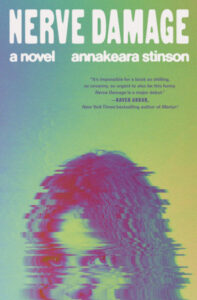
Nerve Damage by Annakeara Stinson is available from Alfred A. Knopf, an imprint of Knopf Doubleday Publishing Group, a division of Penguin Random House, LLC.

Annakeara Stinson
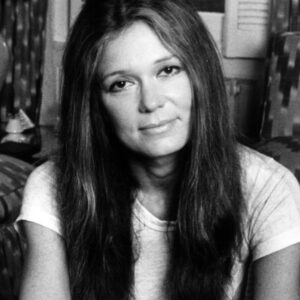
Annakeara Stinson is a writer whose work has appeared in Bustle, Brooklyn Magazine, The Inquisitive Eater, IndieWire, Paste, Marie Claire, and more. She has an M.F.A. in fiction from The New School and currently lives in L.A.