A Place For Me: Navigating My Blackness Through Film and Print
“I kept looking for the flaws, the pieces that I had predetermined were broken and realized that I had never actually seen myself.”
At one point, I am certain it was grand.
That’s not how I met the Castle Theater in the 1980s, its opulence long gone. You could pay four dollars and see as many movies as you wanted. There were two screens that alternated between showing upward of four films. It was walking distance from my grandmother’s house. The dampness, the slight odor and the occasional mouse made it so that I only saw movies there when I couldn’t get a ride or didn’t feel like taking the bus out to the suburbs to a real theater, one that might be less sticky. For all its stickiness, grime and scent, the images reflected in the darkness of that room were an escape.
Transporting was necessary.
The theater sat just above the main downtown road in Irvington, New Jersey. Like every city in the area that was now predominantly Black, Irvington had once been a bedroom community for whites in its earlier days. The town next door, Maplewood, built walls and created one-way streets to direct the flow of traffic coming in and out of Newark and Irvington to protect its fading notion bourgeoisie exclusivity.
Those still living in Maplewood hadn’t realized that people with real money had already fled to counties not bordering places that poor Black folks called home. They were guarding a memory of things past, from people like us.
I kept walking, and each step seemed to become less heavy, unencumbered by fear. The beauty washed over me.
As kids you make do with what you have. There were no upgrades or conveniences at The Castle, but it was there. It had not become a dollar store or a church like many of its contemporaries, and at least there were no box fans in the aisle; the air conditioner still sputtered a measure of coolness. The seats were often broken and not upholstered. You just made sure to show up early so you could sit in the better seats downstairs with cushioning and enough light to see if anything was running past your feet.
I loved movies.
I could sit in a movie theater all day when I was a kid, but we rarely went. I saw a couple Muppet movies and the Star Wars films. My cousins Darlene and Nicole took me to see Poltergeist when I was nine, which in hindsight was a terrible idea. Most of my movie watching as kid consisted of bootlegs that my uncle Dwight would drop off to my grandmother’s house. But, when I hit my teens, if I had ten dollars, I was at the movies. I sat in that dirty theater, rapt. Right there in tattered seats while keeping an eye out for mice is where I decided I was going to make films.
I saw the classics.
Disorderlies introduced me to Ralph Bellamy. I loved the Fat Boys and thought Troy Byer was going to be a superstar. I watched it twice in the same day. When we went to see The Blob, a different movie we did not buy tickets to see appeared onscreen. We didn’t grumble. I don’t even remember what film played instead. It didn’t matter. We watched it, and then they told us to switch over to the other screen to see the movie we had actually paid for. One time, somebody screamed, and we all took off running like that scene in Cooley High. Once we made it to the lobby, we realized that it was a prank and shuffled back on to our seats, laughing, unbothered by the disturbance.
And, then there was Spike.
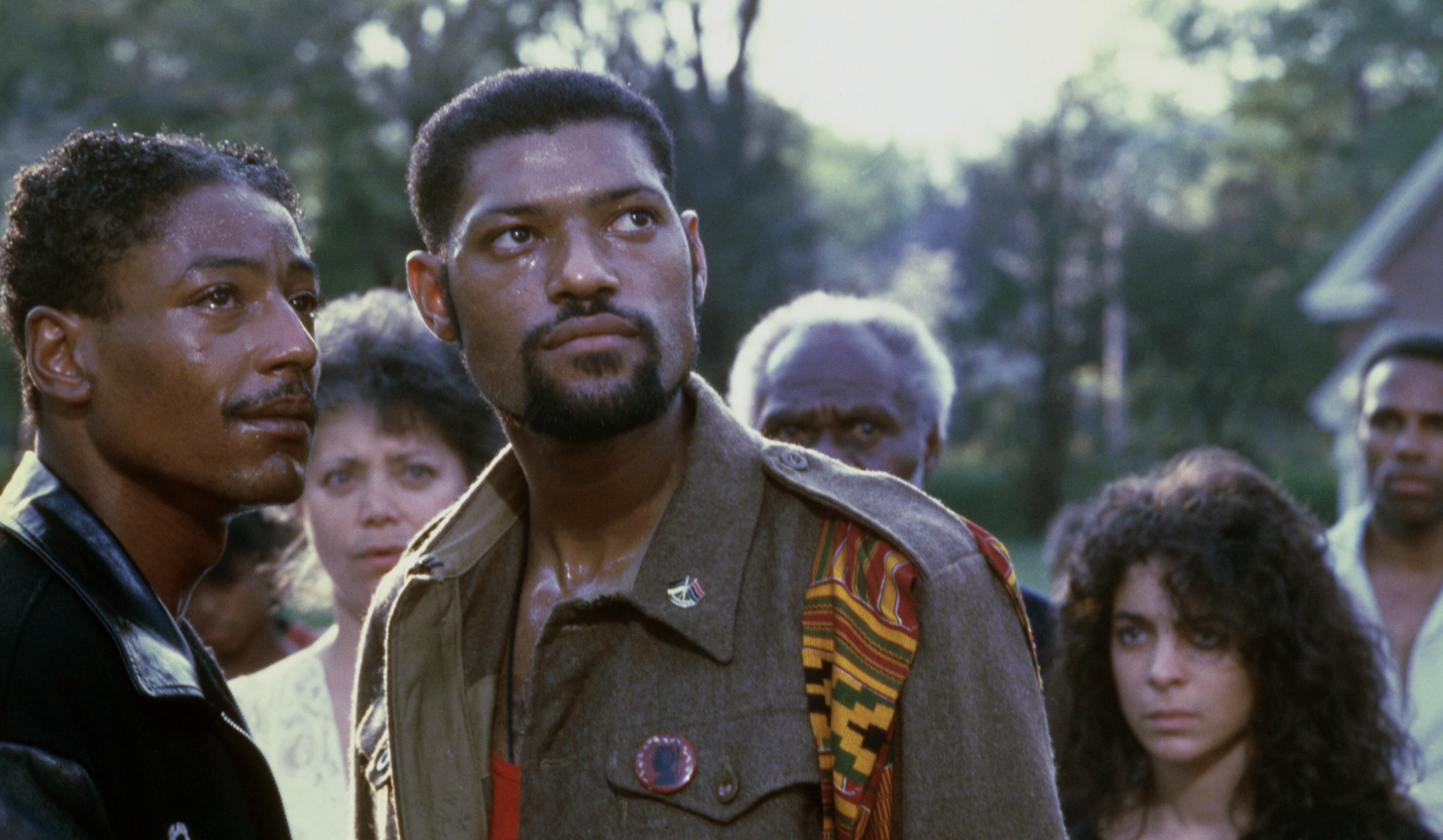
I became aware of Spike Lee while watching an entertainment news show. The hosts were talking about this young dude from Morehouse who was making it big in Hollywood. She’s Gotta Have It wasn’t the type of film that made it to The Castle. You had to go to New York to see movies like that, and I wasn’t art-house theater level yet. So, when School Daze came out, I was right there when it opened.
It was 1988, and the theater was packed with Black high school kids who had no real idea what the movie was about. We just knew it was Black and had all heard and seen the music video “Da Butt” by the time the movie hit the theater. I was beginning to think about where I wanted to go to school and most definitely had Black colleges on my mind without ever having stepped foot on one HBCU campus. From its opening frames, School Daze had me in the palm of its hand. My mind worked overtime processing what was on screen and on what was happening in the theater.
Why are they laughing at the dark-skinned sistas?
Gotta do more about apartheid.
I am going to be an Alpha.
I want to make movies when I grow up.
By the time the film had wound its way to the homecoming scene, you couldn’t tell me that I did not go to Mission College. The entire theater was up doing Da Butt along with the folks on screen. Laurence Fishburne’s rallying cry at the end, “Wake up!” energized me, and I walked out of the theater with a roadmap.
The summer before my senior year, my father’s mother, Nanny, somehow convinced my mom to allow my brother and me to go down south for the family reunion. I had never been on a trip before. I was sixteen and don’t think I had stayed in a hotel at that point. My father was going to be on the trip too, but my Aunt Diane and Nanny assured my mom that they would take care of us. With her blessing, my brother and I headed down to Virginia.
Like every other Black family I knew growing up, we had a subscription to Ebony magazine. Sitting at home one afternoon about two years earlier, I heard the scratching sound of mail being pushed through the slot on our door and the heavy thud as it all dropped to the floor. I ran to the porch and to my delight there was the new issue, with Lisa Bonet on the cover. Seeing Lisa was enough to make my day, but there was another headline on the corner of the cover that caught my eye: “The Richest Black School.”
I turned to that story first.
There was this Lionel Richie-looking dude, Dr. William Harvey, the president of Hampton University, surrounded by students that looked like real-life Cosby kids. There were photos of students studying on the lawn, lounging on boats and hanging out near a Booker T. Washington statue. I was only fourteen, but I already knew I wanted to work in media, and there was even a picture of students looking as if they were producing a broadcast. My head exploded. There were no boats or waterfronts in my life in New Jersey. I read the article and stared at those pictures of smiling students and the immaculate campus and began to imagine. But in real life, I knew I would go to local school or to whatever school gave me money.
The universe had other ideas.
The family reunion was at Hampton University.
I was at home–a place that unbeknownst me was already in my blood….This new place, this strange place, already belonged to me.
For the first couple of days, my cousins and I ran amok at the Thr-Rift Inn Motel in Newport News. It was probably a dump, but that’s not how I remember it. We were having too much fun to care about how it looked. Much to the other guests’ dismay, the motel became our playground—hanging in the parking lot, running from room to room and filling the air with gut-busting laughter. We jaywalked across busy Jefferson Avenue to go see The Abyss, a film that felt futuristic with its underwater visual effects. It was my first time seeing something on a screen that big. I felt immersed in the water, like I was onscreen, too. What-a-Burger was the choice for just about every meal. It was right next door to the motel where we were staying.
I felt like a real teenager for the first time.
No hovering, and room to breathe.
My brother was with my aunts and younger cousins. He was so young; they kept a close eye on him. My father pretty much left me to myself the whole trip. I am not sure where he slept. To be honest, my father was of no concern to me. He had his drink, his favorite cousins and whatever else he needed to be entertained.
I had myself.
Living in a house where every inch of space was taken, being alone in that motel room was a retreat. I imagined that this was what it must feel like to have a door that closed off the rest of the house to a room that only belonged to you. I had not been to myself in a very long time; sleep felt wasteful. I wanted to stay awake to feel the space, take in the silence and hear my own thoughts. Both space and silence were largely foreign concepts, so was privacy. There was a full-length mirror in the room. I got naked and took in my body. I had no idea how I looked. The mirrors I primarily used at home were pretty much from the shoulder up. This was my first time seeing my whole self.
My body was beautiful.
I had not known this before. I kept looking for the flaws, the pieces that I had predetermined were broken and realized that I had never actually seen myself. I explored my body in ways that I had not before, pleasuring myself in the limited ways I knew how. Being alone was a gift. My mind could not conceive of any part of this trip being better than those moments alone.
Then, I entered Hampton’s gates.
The campus was still. There were very few people milling about, mostly groundskeepers and security. When I exited our rented van at Katherine House, a petite home that sat overlooking Chesapeake Bay, it felt as if I had stepped into a postcard. The campus felt even more magical than I had imagined while flipping through Ebony. Standing on the waterfront, looking at the lush greenery and listening to the lapping waves splash against the jagged rocks along the shore was a baptism of sorts.
Always looking for time to go inside my head, I slipped away to wander the yard. Coming from a small parochial school that only held four hundred students, the constitution of Hampton’s land and its buildings intimidated me. But I kept walking, and each step seemed to become less heavy, unencumbered by fear. The beauty washed over me. The faces of all those kids who looked just like me started to populate my mind as I continued to wander.
I saw myself in those visions.
And, suddenly, Hampton was no longer a dream, it was a mission.
By the time I circled back for the family dinner, Hampton was part of me. The Ebony article and the chance to be on Hampton’s grounds were a preamble to what was to come, or at least I hoped. I made my way back to my clan, passing by the stately president’s mansion and back onto the waterfront facing the bay where my family was gathered.
This place I had just met hours before had etched itself on my heart. I was at home–a place that unbeknownst me was already in my blood. Family had worked its grounds, had taken classes, had caught fish on its shores, and it was providing the gathering space for our biennial assembly. This new place, this strange place, already belonged to me.
_______________________________
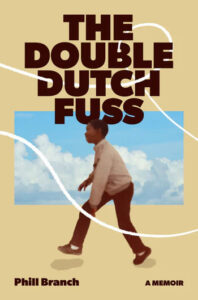
Excerpted from The Double Dutch Fuss by Phill Branch. Reprinted with the permission of the publisher, Amistad, an imprint of HarperCollins Pubishers. Copyrighted © 2026 by Phill Branch.
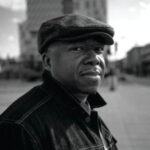
Phill Branch
Phill Branch is a writer, live performance storyteller, and regional Emmy Award-winning filmmaker. He is a 2025 recipient of the Maryland State Arts Council’s Creativity Grant and received the Council's highest honor, the Individual Artist Award, for Theater (Solo Performance) in 2019. He was the GrandSLAM Champion of The Moth in D.C. in 2018 and has since traveled all over the country and overseas to tell stories with the organization. Branch was a 2014 Lambda Literary Nonfiction Emerging Voices Fellow and is the founder and Creative Director of Baltimore Story Fest, a showcase for live, personal storytelling. An alumnus of the American Film Institute, Branch has an MFA in Screenwriting. He earned his BA in Mass Media Arts at Hampton University and later returned as a professor in the English department to teach writing and develop the Film Studies program. Currently, Branch is a Resident Artist at the Howard County Center for the Arts in Maryland.