A Literary Haunting: What the Ghost of Sylvia Plath Taught Me About Grief
“What haunts us doesn’t need to harm us, but can instead help guide us through what feels too difficult...”
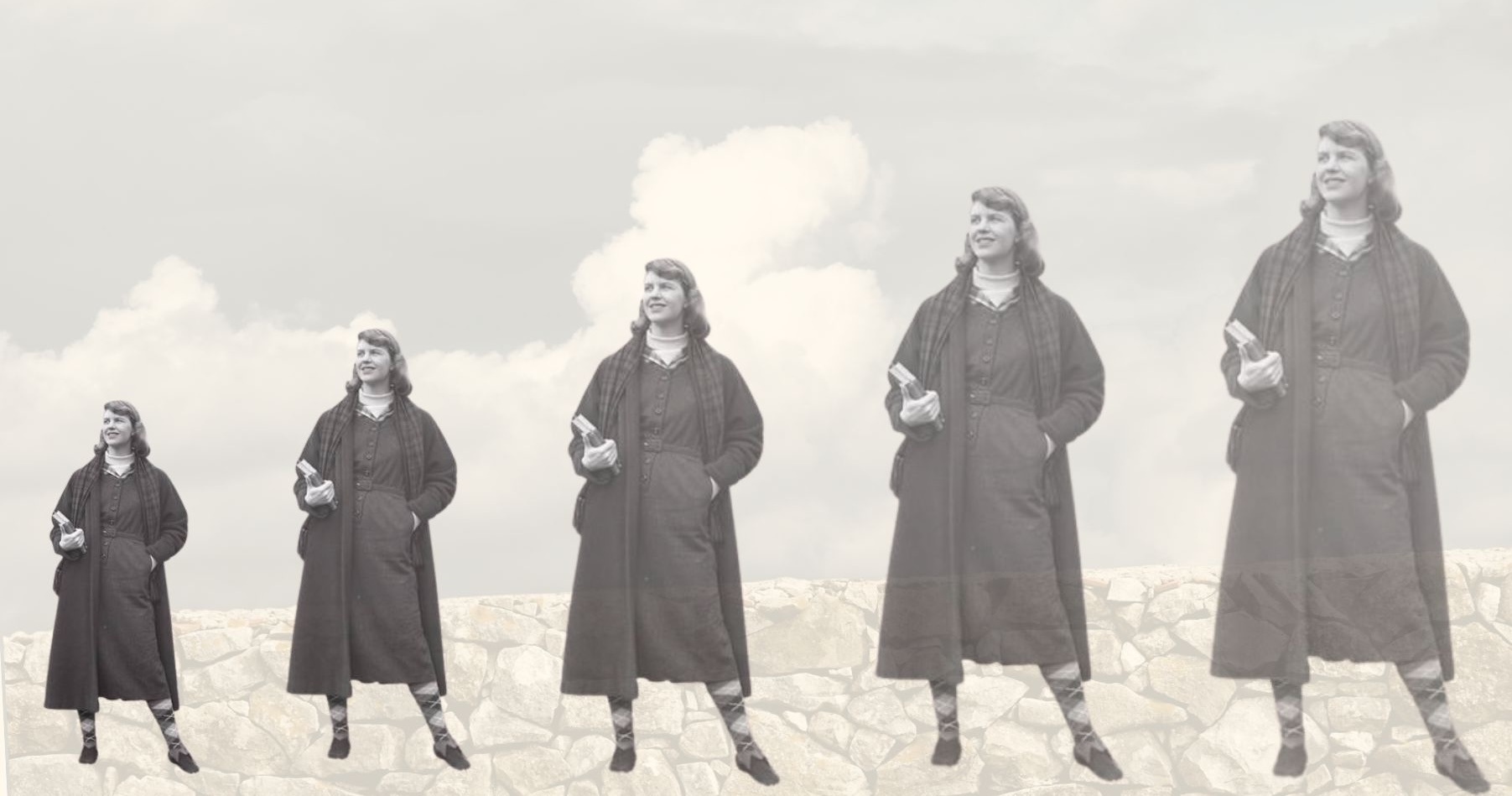
Before the ghost of Sylvia Plath haunted the yellow house on the bluff in my novel White Rabbit, she haunted me. I was a twenty-four-year-old graduate student plagued by the loss of my father’s second wife, a woman who had been a maternal figure for much of my childhood. As I walked the university campus, I felt the ghost of this grief as something tangible—something I could see, something that followed me.
I was just beginning my writing career and found myself involuntarily coming back to echoes of loss and resilience, themes that I continue to excavate. I wouldn’t have been able to articulate it then, but my writing was creating a place for grief to sit, and it was in this space that the ghost of Sylvia Plath first found me.
Plath was no stranger to grief. She learned at a very young age, when her father died, that the world was not always kind. In her work, we see Plath shape loss and death into something that can be understood. In this way, literature creates channels for us to navigate, often imperfectly, through pain. Still, if Plath was a victim of her grief, her words are the ghost she left behind.
My writing was creating a place for grief to sit, and it was in this space that the ghost of Sylvia Plath first found me.
For Penelope—the eleven-year-old protagonist in White Rabbit—the ghost of Sylvia Plath is not someone to fear, but someone who makes her feel less alone. Less a ghost, really, and more an imaginary friend.
Plath’s ghost appears two weeks after Penelope’s father has left the yellow house on the bluff. As the two form a friendship, the ghost fills a space in Penelope’s life that has been hollowed out by her father’s departure. Penelope, a neurodivergent child, has trouble understanding what makes her feel sad and afraid. She prefers to ignore these hard-to-digest emotions and occupy spaces where she does not have to acknowledge her loss.
I was eighteen years old when my stepmother, a woman who helped raise me for much of my childhood, left. For years, I packaged up my own pain and refused to talk about what I had lost. Like Penelope, I could not exist in the same space as my grief without it swallowing me whole. And, because I could not find a way through this loss, I simply pretended that it didn’t exist. The grief found me anyway.
It is only through what haunts Penelope that she can begin to process her grief in ways that bring her understanding and peace. And this is what both Penelope and Sylvia Plath have taught me—that to be haunted is not something to fear, but something to embrace. That what haunts us doesn’t need to harm us, but can instead help guide us through what feels too difficult to negotiate alone.
Plath was eight years old when she lost her father. Penelope is eleven when her father leaves the yellow house on the bluff. In the empty space that loss creates, both Penelope and Plath use words and stories not only as vessels through grief, but also as a form of resilience. Because if the ghost of Sylvia Plath can be read as a manifestation of Penelope’s sadness, she can also be read as a manifestation of Penelope’s own strength as a child charting an unfamiliar and unforgiving space.
Though she can’t understand why her father left, the stories Penelope tells herself about his disappearance provide her the most comfort. And isn’t this so often true of children? For me, as a child grappling with loss, my imagination became my escape from a world that was riddled with confusion and injustice. It was how I learned to wander roads freckled by the potholes that grief left behind. But imagination is fickle. What was once comforting in its deception begins to fracture as it collides with reality. When Penelope can no longer ignore what she has repressed, she is left with a grief that feels too large to pass. It is then the ghost that creates a passage for Penelope to move forward.
Although we may want to flee from what makes us afraid, it’s so often that these ghosts are the only ones who can help us move through the spaces of discomfort and pain.
The white rabbit, a character both created and popularized by Lewis Carroll’s Alice’s Adventures in Wonderland, is also a figure that guides a young girl through an unfamiliar space. Alice follows the rabbit—a creature that is both real and not real—into a land that feels unusual and, at times, dangerous. Penelope, too, is asked to occupy a landscape that frightens her, not only as a neurodivergent child in a neurotypical culture, but as a child now situated in an adult world. There is a sense of grief in this—for both Alice and Penelope. To step into these unfamiliar spaces is to experience loss itself, for the cost of entry is so often the child’s own innocence.
We all have ghosts. We are all haunted. Although we may want to flee from what makes us afraid, it’s so often that these ghosts are the only ones who can help us move through the spaces of discomfort and pain. Historically, the ghost is presented as a figure that exists in the space between life and death. However, for Penelope—and for myself—these ghosts are not liminal, but present. They are the guide, the navigator, the white rabbit that digs the tunnel through grief and urges us to follow so we can crawl through the hole, emerging on the other side to see the world as something still beautiful.
Plath’s mind, her words, her grief have been studied by scholars and writers and readers for decades. Yet it is through Plath’s voice—her journals, her letters—that she has become the ghost that follows me: the ghost of my own grief, of Penelope’s grief, and the ghost that led us both right back out of it again.
_______________________________
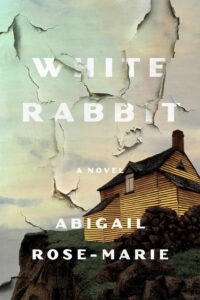
White Rabbit by Abigail Rose-Marie is available from Union Square and Co., an imprint of Hachette Book Group.

Abigail Rose-Marie
Abigail Rose-Marie is a writer from Grand Rapids, Michigan. She holds a PhD in creative writing from Ohio University and an MFA from Bowling Green State University. She currently lives with her wife and their very spoiled pets in Utah. She is the author of The Moonflowers, and her novel, Between Breaths, in which two female scientists defy societal norms and risk everything to create the first life-saving whooping cough vaccine, is forthcoming from Lake Union.