9 books to read if you, a fully grown adult, have never read a book.
In a recent interview with Interview magazine, influencer Alix Earle admitted that she has never read a book. Speaking for myself and the collective reaction in the Lit Hub Slack, this was shocking. I’ve run into people who only read one book a year, or who haven’t read a book since it was assigned to them as homework, but someone who has not read a single book ever is next level.
You’re not alone if your first question is “Who?” I Googled it: Alix Earle is an influencer who got her start making “get ready with me” videos for TikTok that blew up. She’s now got a Netflix reality show, a podcast, and more followers than people who live in New York City.
Another good first question: How? It’s almost impressive to have gone through middle school, high school, and then four years as a University of Miami marketing major without reading one book. I skipped homework assignments too, but damn.
(A sidebar, but if you have a book coming out soon, send Earle a copy ASAP because getting the “This was the first book I read” jacket copy would be an apex blurb.)
This is an interesting thought experiment, though. If there was an adult in your life who was a literary blank slate, what is the first book you’d hand them? It might not be necessarily the best book or your favorite book, but rather something that could serve as the key that unlocks the entire library. What book could make someone fall in love with reading as an experience and introduce them to what the art form is capable of?
There’s a related (and very interesting!) question about the bookiest book, the ideal of the novel that could stand as the exemplar of the form. But that’s not precisely what’s on the table here. I’m trying to think through books that will specifically appeal to someone who has gone this long without reading. An abstention from reading isn’t about developing taste as much as it’s breaking a habit. So a first book has to be something that a non-reader will 1) start, 2) be interested in enough to finish, and then as a side quest, 3) spark a desire for more books.
To put this in Lit Hub terms: Here are some ideas for going from zero to Didion tote.
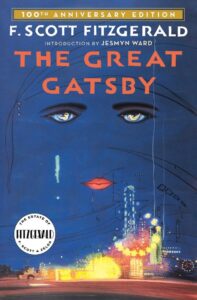 F. Scott Fitzgerald, The Great Gatsby
I don’t think it makes sense for all of these recommendations to boil down to “go back and finish your homework,” but Fitzgerald’s classic is an exception. Gatsby is a great novel, and it’s short and accessible. And thematically, I do think the themes are still resonant: perils of wealth, the longing for love and affection, and feeling weird at a party.
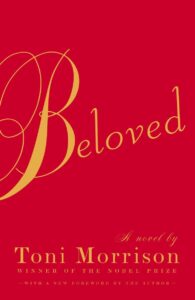 Toni Morrison, Beloved
I’m immediately going to break my own rule here and pitch a great novel that is also assigned to high schoolers. But can you imagine if your first book ever was a Toni Morrison book? Fortunately there is plenty more Morrison to read, but would that set the bar too high? Or would you become ravenous trying to chase that initial experience?
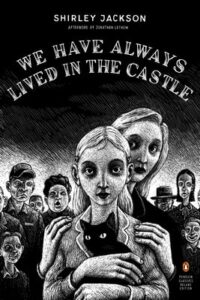 Shirley Jackson, We Have Always Lived in the Castle
I do think a lot of people think books are all Big and Serious and count themselves out as not being up to it. But a book can be spooky and weird too. Jackson’s best novel is a complex and satisfying narrative and glows on the sentence level, but it’s also freaky. A book can put you in someone’s mind more than other art forms—here to psychologically terrifying affect—but it can also be a wild ride that might feel familiar and cinematic to a non-reader.
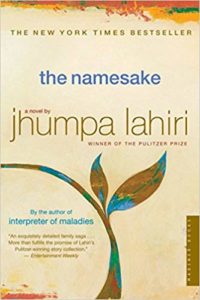 Jhumpa Lahiri, The Namesake
Part of what makes novels a unique art form is the ability to work with time. A great book can collapse the drama of entire generations down to a few pages just as easily as a single day can expand into sprawling, multi-volume works.
Lahiri is one of our greatest living writers, and The Namesake is a great showcase for the scope and scale that a novel can hold. And I don’t care how much fiction you’ve read, Lahiri’s ear for a perfect detail will take anyone’s breath away.
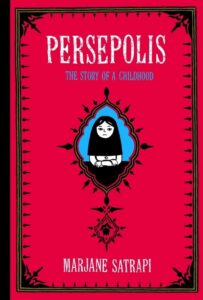 Marjane Satrapi, Persepolis
A graphic novel could be a great way to break the seal on finishing a book. There are way fewer words. And pictures! In that case, Satrapi’s Persepolis is hard to top: a coming of age story that’s funny, touching, and very smart.
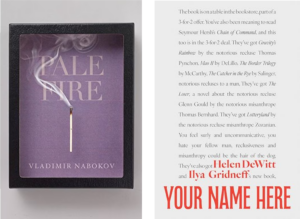 Vladimir Nabokov, Pale Fire or Helen DeWitt and Ilya Gridneff, Your Name Here
There’s a riskier approach to this hypothetical: shock therapy with something completely idiosyncratic. You can wake someone up with a sweet word or you could dump a bucket of water on them. This is the bucket approach: give your unread friend a work that can only exist on the page. The risk? They reply “What the hell is this” in frustration. The goal? They reply “what the hell is this” in excitement.
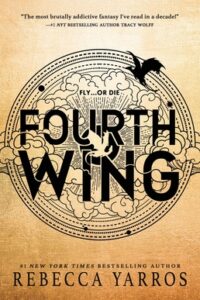 Rebecca Yarros, The Fourth Wing
Are Yarros’s books the pinnacle of the novel as an art form? Not even close, but hear me out. One of the reasons that reading is such an important part of my life is because I love to talk about books. All of my closest relationships are with readers, and I love to be a member of a community of book people. Fourth Wing is (I gather) appealing because it’s horny and full of magic critters, but it also appeals because it’s a book that millions of people can talk about. It’s a friend-maker and a foe-maker.
I suspect that a non-reader looks at someone hunched over a paperback and sees an activity that looks tedious and lonely. But of course reading is never lonely. A book is pleasurable as an activity, yes. It reveals new ways of seeing, thinking, and being, and it can inspire the sublime, humbling awe of being in the presence of great art. But far from being isolating, a book is something to discuss, to share, to fight over, to flirt and fall in love over, to walk through hand-in-hand.
I’m reminded of the description from Twain of Tom Sawyer and Becky Thatcher exploring a Borgesian cavern without end: “No man ‘knew’ the cave. That was an impossible thing. Most of the young men knew a portion of it.” Sometimes reading feels best when you’re following a path pointed out by a friend, or when you’re finding new portions of the infinite map, and lighting the way behind you.
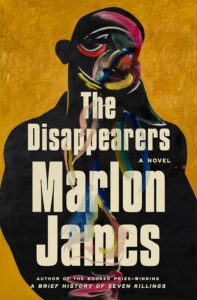 Marlon James, The Disappearers
Then again, books can be very, very good. A reason for living. Maybe we just jump off the high dive and into the wonderfully deep end here.
Image from People.com

James Folta
James Folta is a writer and the managing editor of Points in Case. He co-writes the weekly Newsletter of Humorous Writing. More at www.jamesfolta.com or jfolta@lithub.com.