7 Books About Writerly Rivalry
Laurie Petrou Recommends R.F. Kuang, Meg Wolitzer, Sally Rooney, and More
I’m fascinated by relationships between writers and always have been. They are often at turns intimate, competitive, toxic, and gratifying. Just as their own fictions bend and weave tales, so too do their own lives and rivalries. I am fortunate to have some very close writer friends, and they mean the world to me: we share drafts and notes, but also tea and company as we face the trials and vagaries of the publishing industry. And while I myself have been blessed with friendships and mentorships that have shaped my writerly life, I have also seen how writers can turn on one another when the pressure of a cut-throat industry collides with artistic and competitive temperaments: jealousy and competitiveness can sour the milk of the most benign friendship when, for example, one writer eclipses the other.
My novel The Rayburn Affair lays bare notions of friendship, rivalry, envy, authorship, and power. Set in both a university setting and the publishing industry, two places fraught with opportunities for paranoid rivalries and competition, I let my characters loose to claw their way out of the traps they set for themselves when they discovered how fine the line is between friends and rivals.
Here are some of my favourite books that feature creative people and their relationships with other artists or writers:
*
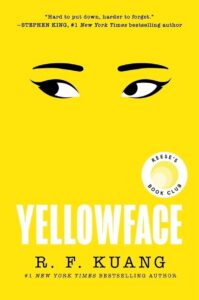
R.F. Kuang, Yellowface
R.F. Kuang’s Yellowface is plotty, commercial fiction, demonstrating her deft ability to move between genres. In this novel, she offers a deliciously biting critique of the publishing industry, including the ways in which readers employ social media and how agents, editors, and other members of the industry address issues surrounding diversity. Jealousy and entitlement steer the actions of middling white writer June Hayward, who brazenly steals the manuscript of her much more talented friend, Chinese-American author, Athena Liu, after being the sole witness to Athena’s death. June has long been deeply jealous of Athena’s success, and continues her brand of entitled ownership, pretending to be racially ambiguous and calling herself Juniper Song. Haunted by someone she becomes convinced is Athena’s ghost, June digs herself ever deeper, adamant that she deserves the fame that she long coveted of Athena. We see echoes of stories within the past few years of white authors making attempts to claim the backgrounds—if not the stories—of writers of colour in order to capitalize on what they see as the new direction of publishing, or to excuse their own appropriation within their writing after the fact. Kuang’s book will ring true for anyone who pays attention not only to books, but to the world surrounding those books, and will delight in the anticipation of watching it crash down on June.
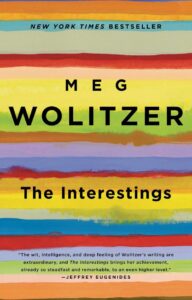
Meg Wolitzer, The Interestings
I read this wonderful book by Meg Wolitzer on a trip to New York, which allowed the setting of the novel to burst from its pages. At the start of the book, we meet a group of talented and dreamy-eyed creatives at a camp for artsy kids—Spirit of the Woods—in the summer of 1974. American politics bleed into the margins of their conversations, which are heady and serious, and then brash and provocative. Ethan is the unattractive but undeniably talented artist of the group who call themselves (in that self-conscious but arrogant blush of youth) The Interestings; Jonah and Cathy are the children of a famous Laurel Canyon-esque folk singer; gentle Ash is the beautiful and talented star around which, orbits many, including insecure and often-envious Jules, who steers the story in her writerly observations. Over the course of the novel, we follow all six as they shed childlike creative ideals and experience what it is to grow up chasing artistic dreams with varying degrees of success and failure.
The novel explores the challenges of making a life both within and without the arts, and how that unfolds from adolescence into adulthood. The friends are witnesses to one another’s success and failures and seem to have a stake and a sense of prideful ownership over one another because of their decades-long friendships. Set against the backdrop of political dishonesty and the country’s abandonment of ideals, the book probes questions about how to be an artist in the world.
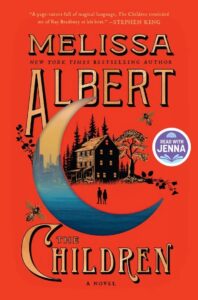
Melissa Albert, The Children
This debut adult novel by long-time YA author Melissa Albert had me in its clutches from the first page. It reminds me of how Roald Dahl could craft a dark but adventuresome story for adults that was like a bitter candy compared to his children’s books. This book is like a children’s fantasy that has gone deeply, darkly wrong. A doozy of a novel about two grown children—Guinevere and Ennis—scarred by their seemingly romantic and artistic upbringing in a farmhouse in Vermont under the negligence of a wildly talented writer for a mother, and a hapless painter for a father. It was in that idyllic setting that their mother Edith began her writerly journey by penning soon-to-be uber-famous books, ‘The Ninth City’ series, that featured characters named after and based on her own children. But now Ennis and Guin are grown and standing in the ashes of that childhood. Where does her talent come from? Where does a muse end and something much more sinister begin? What follows is an unflinching book that digs deep into the heart of what it means to be creative and at what costs. These are themes I return to again and again in my own work—notions of inspiration, ambition, and fame. This book reminds me of the way I felt reading unsettling, disturbing novels as a child. Those from which I could not turn away and stayed up way too late reading.
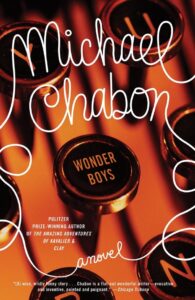
Michael Chabon, Wonder Boys
One of my all-time favourite books is Wonder Boys. I spent a chapter of my PhD dissertation on it, on the Bildungsroman that takes place between both young and old characters as they compete and compare and grow together. Michael Chabon applies his gorgeous prose and masterful storytelling to a seemingly easy plot about a washed-up writer and his young and talented protégé, making this work an inquiry into aging, originality, depression, family, and, ultimately, feeling content and settled in one’s creative life. Grady Tripp is a writer and professor who has rested on the laurels of his first book for years and can’t seem to seal the deal of his sophomore novel, which is nearing 2800 words. Plagued with self-doubt and feeling his best years are behind him, we follow Grady and his effortlessly talented but deeply troubled student, James Leer, as they bumble their way through several days that are as funny as they are touching, as much a caper as a story of love—for story and for writers. In this novel that draws older and younger writers together, we see how each can envy but ultimately learn from each other.
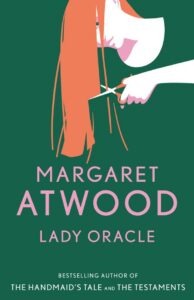
Margaret Atwood, Lady Oracle
What does a writer need to create, and to live a creative life? These have long been preoccupations of mine. I’m curious about what makes a life and mind ripe for writing. In this early novel of Atwood’s, we follow Joan Foster, a romance writer whose efforts to escape, both in reality and fiction, are courageous and inventive. Joan has a lifetime of trauma and secrets, she is a complicated and complete woman, and after she releases a smash hit of feminist poetry, an anonymous blackmailer threatens to reveal Joan’s inner life and past to the public. We witness how a writer is made and unmade by life and art in this truly heroic feminist character, who ultimately charts her own path within and without the publishing industry, readers, and those who want to see her undone. The language is, as always for Margaret Atwood, bold and poetic without losing the plot, which is even now, fresh and unique.
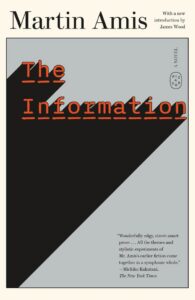
Martin Amis, The Information
Jealousy! Envy in its deepest, greenest, baldest manifestation. Martin Amis comes out swinging in this novel about two mid-life writers and friends: Gwyn Barry and Richard Tull, respectively successful and middling. Once full of promise, Richard’s writing career has stalled. Gwyn’s, however, who Richard considers to be his inferior, has jettisoned into success and is in the running for a huge literary prize. So the trap is set, and we watch as the deliciously dangerous elixir of ambition, competition and hubris provokes a bonkers plot as Richard’s seemingly innocent but increasingly dangerous plans to upend Gwyn’s career careen uncontrollably towards disaster. In this novel Amis is as unflappable as ever, and his dry humour and the dark undertone of the novel are exactly my taste. Much like many on this list, the author casts a side eye at age here, exploring the unease or growing panic of writers for whom the clock of their career is ticking, employing humour and biting reality in his observations of the realities of working within a fickle industry.
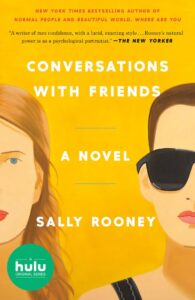
Sally Rooney, Conversations with Friends
My favourite Rooney novel, her debut, this book feels like a hazy unspooling of discussions with a very close friend, confidant, lover, and rival, and while we learn about them, the protagonist, a writer, learns about herself and her own limitations and ambitions. Another novel where the author explores how to cultivate the mind, body, home, and social circle in order to propagate creativity, and wonders what happens when any or all elements become fallow or diseased. What happens to the work? We meet young writers who work as collaborators, ex-lovers, and best friends: Frances (the narrator) and her bold and uninhibited friend, Bobbi. Frances and Bobbi come into the orbit of two other creatives, the essayist and photographer Melissa, and her actor husband, Nick. Frances and Nick become lovers, and Melissa and Bobbi grow close as well. We see Frances struggle with her own skills as a writer, her confidence and insecurities as a woman, especially in light of Bobbi and Melissa’s respective self-assured confidence, and her position in the world in every physical sense. The writing is interior but not suffocating, it is a character novel, but it is relatable and topical. Frances feels like a child in the world of grownups, even as she is in every way an adult. I enjoyed her explorations of inspiration, of how Frances starts, stops, and builds when she is writing. Rooney expertly describes the way that writing can sometimes feel like building a house with no tools, or only those tools that you’ve made yourself and are as yet unsure how they work. Frances is a young writer navigating the labyrinth of adulthood and her narration is close and touching, and to this author, entirely enchanting.
__________________________________
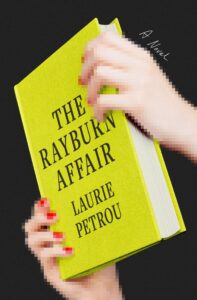
The Rayburn Affair by Laurie Petrou is available from House of Anansi Press.

Laurie Petrou
LAURIE PETROU is an award-winning and internationally published author of young-adult fiction, short stories and commercial literary novels. Her books have twice been on the Globe and Mail Top 100 Books of the Year, among other top book lists. Laurie is an associate professor at Toronto Metropolitan University, where she is a Dean's Teaching Award winner. She lives in Niagara, Ontario.